Category: Security policy

German government presents report on the maritime industry

On 12 August, the Federal Cabinet published the Federal Government's fourth report on the development and future prospects of the maritime industry in Germany. This report is presented every two years at the National Maritime Conference and describes the current situation as well as funding measures and political priorities of the federal government in the areas of maritime shipping and ports, maritime industry, offshore wind energy and marine research.we have learnt from the accompanying press release that shipbuilding policy in Germany is to be given greater political visibility. The "Innovative shipbuilding secures competitive jobs" programme was extended by the Federal Ministry for Economic Affairs and Energy (BMWi) on 1 June 2015. It is intended to protect the market launch of innovations and make the construction of small ships and mobile offshore structures more eligible for funding. Other important elements of the federal government's shipbuilding funding strategy are the "Maritime Technologies for the Next Generation" research and development programme, the so-called CIRR interest equalisation guarantees and the federal government's export credit guarantees. It is well worth reading the 59-page report, which covers economic, ecological and technological maritime developments as well as the future of a European harbour policy. In view of the fact that a national port policy is already proving difficult, there seems to be reason for pragmatic optimism that meaningful synergies can be achieved at European level, despite all the difficulties. Download the "Fourth Report of the Federal Government on the Development and Future Prospects of the Maritime Industry in Germany" as a PDF. The current report "Facts and Figures on Germany's Maritime Dependence"...

Weiterlesen
The "new Suez Canal"

Reports about the opening of the "new Suez Canal" (http://www.arcor.de/content/aktuell/news_politik_ausland/3897896,1,Neuer-Suezkanal-wurde-eröffnet,content.html) are making the rounds in the media. This is in fact an extension of the existing canal. The very short construction period of just one year is remarkable. Egypt financed the construction with private funds from its citizens and is now hoping for more ship passages and an economic upturn in the canal region. Internationally, it has touted the project as its gift to the world. The expansion means that passing traffic is possible on larger sections, but not on the entire route. For shipping, the time spent in the roadstead or in the Bitter Lakes will be reduced.

Weiterlesen

German Navy pools forces in naval battalion

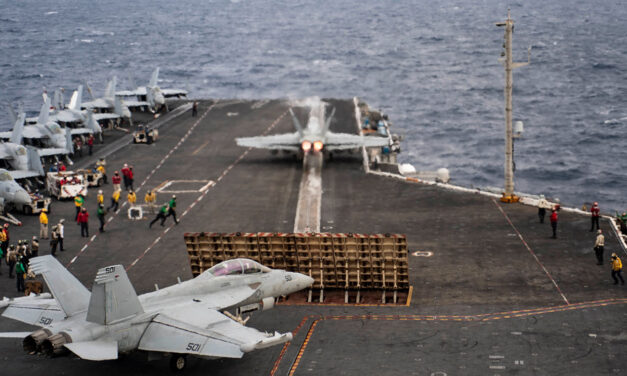
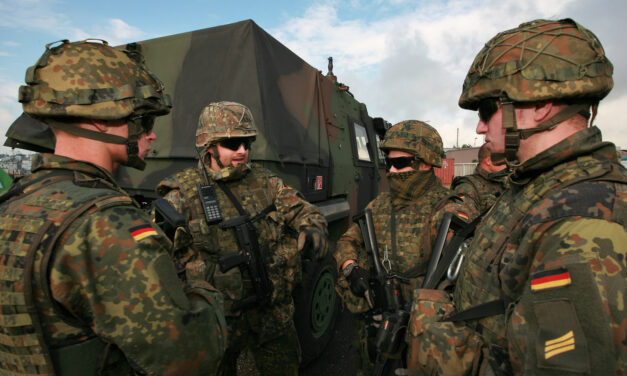
The German Navy is pooling its infantry forces in a new but historically unprecedented organisation! As a result of the realignment of the Bundeswehr decided in 2010, the specialised infantry forces of the German Navy will be combined into a naval battalion from 1 April 2014. Specifically, this involves the naval protection forces, the boarding forces and the mine divers; the base will be Eckernförde. The naval battalion is described as a multitool by the armed forces themselves: As part of its alliance commitments, particularly in international crisis management, conflict prevention and peacekeeping missions, the German Navy can be found all over the world. The protection of sea routes is just as much a part of the tasks as the protection of ships, harbours,...

Weiterlesen

Nicaragua Canal project - security policy implications

Klaus Mommsen The Panama Canal is to be rivalled; some 600 km to the north-west, Nicaragua also wants to build a canal across the Central American isthmus. The idea for this project is by no means new. The first proposals were already made in Spanish colonial times, when in 1825 the government of the then "Federative Republic of Central America" had the first preliminary studies carried out. Gradually, several routes between 225 and 270 kilometres long were considered. In the end, a route from Greytown parallel to the border with Costa Rica was apparently favoured, initially about 60 km to the west. The canal would then join the Rio San Juan and follow it to Fort San Carlos in Lake Nicaragua. Beforehand, locks would have to raise ships 32 metres to the level of the lake. A large part of the passage was to be travelled on the 26 m deep lake. From the western shore of the lake, an approximately 35 km wide land crossing was then planned from San Jorge to the Pacific coast at Brito - locks would of course also be necessary here. However, this proposal was in competition with two other routes outside Nicaragua: through Mexico (Isthmus of Tehuantepec) and through Panama. When the US government saw problems of poverty and political instability in Nicaragua as well as risks from nearby volcanoes and also suspected that Great Britain (British Honduras) had too much political influence, Panama won the race. French engineers had already begun construction of the Panama Canal; in 1904, the British bought the...

Weiterlesen

Something is happening...

Something is slowly happening in the maritime sector! On 9 November, the Federal Ministry of Economics and Technology (BMWi) announced that the Bundestag had decided "...to increase the funds for promoting innovation in German shipbuilding by one million euros. This means that the federal government will provide a total of 13 million euros in 2013 as part of the 'Innovative shipbuilding secures competitive jobs' funding programme...". One million euros is not a lot with a federal budget of 312.7 billion euros, but we are not complaining. But there is more - we stumble across the "Maritime Industry Focus" on the BMWi homepage, which surprises us with the following excerpt: "A strong, competitive maritime industry is of great overall economic importance for a foreign trade-orientated country like Germany. Maintaining and strengthening Germany as a maritime location is therefore one of the most important goals and fields of action of the German government's maritime policy." Federal Ministry of Economics and Technology: Sector Focus Maritime Economy Even if we are not (yet) convinced that the topic is as important to the Federal Government as it is presented here, it is worth reading the BMWi's brief profile of the maritime economy. There you will also find a reference to the National Masterplan for Maritime Technologies, the aim of which is "...to increase the presence, perception and competitiveness of German maritime technology on national and international markets." The Masterplan goes back to the decisions of the German Bundestag in March 2007 and March 2009;...

Weiterlesen
en_GBEnglish