Category: Magazine

Technical vulnerability of Russian units - Are the sanctions taking effect?

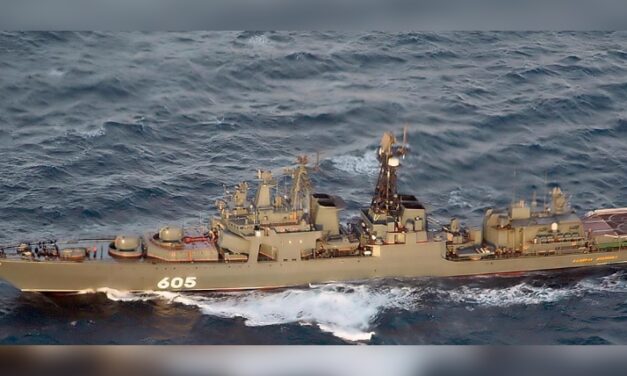
Ukraine keeps meticulous records of all incidents in the navy of the Russian Federation. In early June, for example, Kiev reported an engine fire on the Udaloy-class submarine destroyer ADMIRAL LEVCHENKO (project 1155, 164 metres, 8,500 tonnes) of the Northern Fleet in the Barents Sea, even though this ship would never be expected in the Black Sea. Although not yet confirmed by Russia, the damage on board does not appear to be insignificant. However, another aspect is more important: the engines built in Mykolaiv, Ukraine, in the 1980s have not been able to be supplied with original parts and manufacturer expertise since 2014 anyway, but due to the sanctions against Russia...

Weiterlesen
 "What does the Black Sea teach us?"

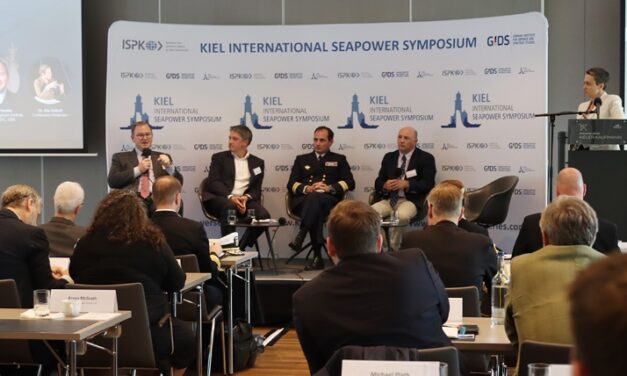
Für die sicherheitspolitische Gemeinschaft stellt das Kiel International Seapower Symposium alljährlich ein Highlight dar. Es bietet Akademikern und Praktikern eine hervorragende Möglichkeit zum Wissensaustausch. Unter dem Motto „(Re-)Learning War – Lessons from the Black Sea“ veranstaltete das Institut für Sicherheitspolitik an der Universität Kiel in diesem Jahr erstmalig gemeinsam mit dem German Institute for Defence and Strategic Studies das Kiel International Seapower Symposium (KISS). Traditionell fiel die hochkarätige Tagung mit dem Auftakt zur diesjährigen Kieler Woche und dem Hafenaufenthalt der Teilnehmer des jährlichen Marinemanövers Baltops zusammen.[ds_preview] Seit 2015 bietet das Symposium eine Plattform zum Austausch in der zivil-militärischen Zusammenarbeit...

Weiterlesen

"Bulava" nuclear missile completes Russia's strategic triad

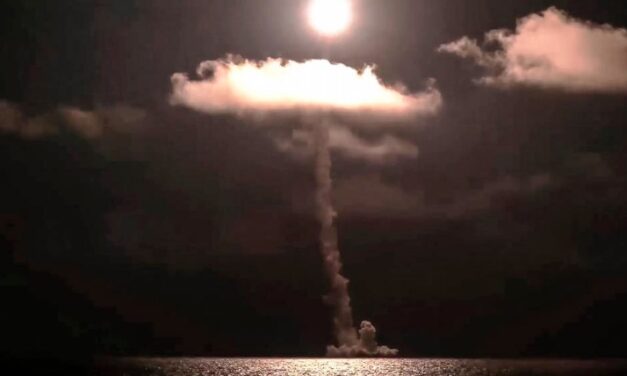
On 7 May, the day he took up his fifth term of office in the Kremlin, Russian President Vladimir Putin handed over the "commissioning certificate" for the new strategic nuclear weapon RSM-56 Bulava - the "mace" - to the navy. A generation of strategic weapons on board various submarines dating back to the early 1980s with logistically complex, different propulsion systems in initially liquid and then solid form (SS-N-18, SS-N-23) had actually necessitated a new development at the turn of the millennium. However, initial design successes, including in Ukrainian armouries, were followed by misfires, which led to a new development based on the vehicle-borne nuclear weapons of the Topol series. This approach also failed...

Weiterlesen

Silos wanted

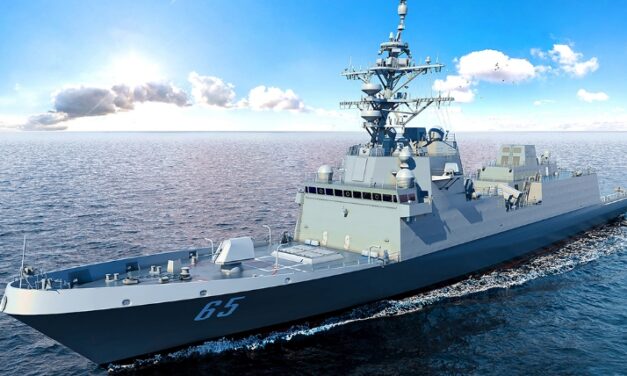
With the decommissioning of the Ticonderoga class, the US Navy has to do without many vertical take-off systems. Discussions are now underway about ways to remedy the situation. The United States Navy is currently facing a significant challenge. The missile arsenal of the ocean-going fleet needs to be expanded, not least in view of the massive expansion of the Chinese fleet. However, the decommissioning of the remaining 13 Ticonderoga-class units planned for 2027 will further increase the deficit; the retirement of the guided missile cruisers also means the elimination of 1586 vertical launch systems (VLS). The introduction of the Constellation-class frigates should partially compensate for this. However, two problems become apparent here. Firstly...

Weiterlesen

The general shipbuilding policy situation - a question of safety

Die kürzlich stattgefundene SMM-Messe war ein globaler Treffpunkt für maritime Technik und Kommerz. Auf der Konferenz MS&D, Maritime Security and Defence, wurden wichtige geopolitische Themen behandelt, die in der maritimen Wirtschaft von großer Bedeutung sind. Bislang war der Auf- und Abstieg großer Schiffbaunationen – von Großbritannien über Kontinentaleuropa und Japan bis zu Korea – stark mit industrie- und handelspolitischen Rahmenbedingungen und Einflussnahme verbunden. Im Fall von China zeigt sich ein differenziertes Bild. Der Einsatz enormer staatlicher Finanzmittel, die Schätzungen sprechen von rund 200 Milliarden Dollar in gut einem Jahrzehnt, lassen sich nur mit geostrategischen Aspekten schlüssig erklären:[ds_preview] Die Schiffbauindustrie...

Weiterlesen
en_GBEnglish