Category: Shipping

Using artificial intelligence to combat lost networks

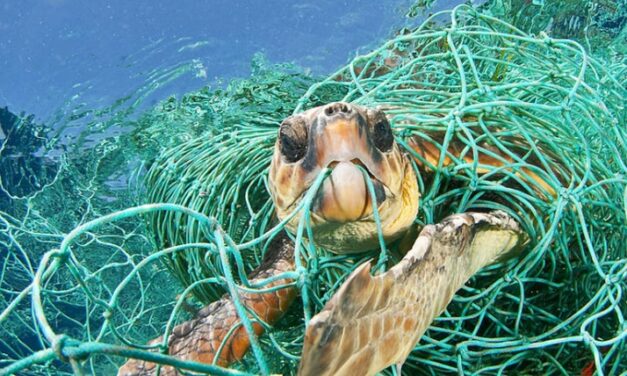
Every year, tens of thousands of tonnes of fishing nets, known as ghost nets, end up in the sea. Sea creatures and diving birds get caught in them indiscriminately and usually die an agonising death. Artificial intelligence is now helping to salvage them. Since the 1960s, fishing nets have no longer been made from the perishable natural materials hemp, sisal or linen, but from synthetic materials such as polypropylene, polyethylene and polyamide (nylon, Kevlar). Nets or net parts manufactured in this way and then lost or disposed of at sea only decompose after several hundred years and thus contribute to the plastic pollution of our oceans. According to the latest studies, ghost nets make up between 30 and 50 per cent of marine plastic and catch...

Weiterlesen
Job with danger and depth

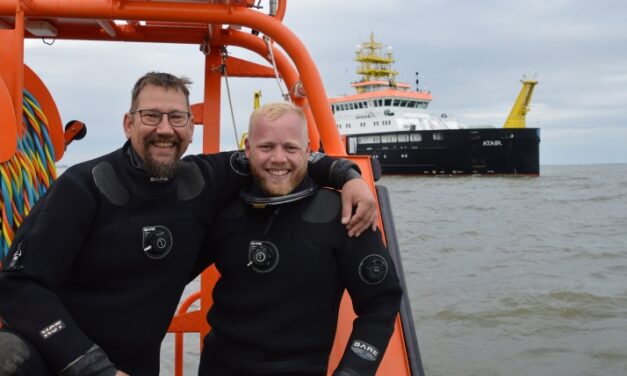
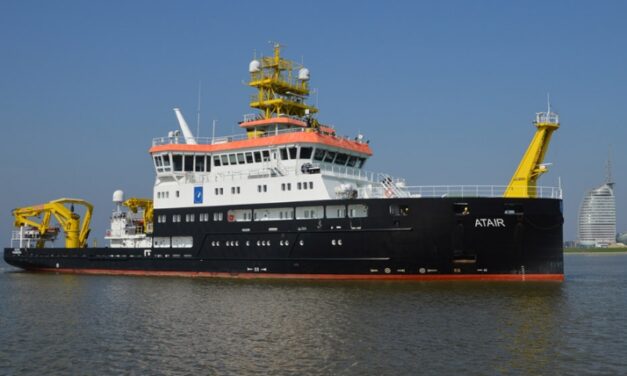
Martin Sulanke has been a professional diver for 36 years. He works on the "Atair". In an interview on board, he explains what his job entails and why it can be dangerous underwater. "I originally come from deep-sea fishing," says Sulanke, who wears a white stubbly beard, a silver earring and a red cap. The 61-year-old, who now lives in Bad Schwartau near Lübeck, comes from the former GDR. He later joined a hydraulic engineering company and trained as a professional diver. After the end of the GDR, he joined the Federal Maritime and Hydrographic Agency (BSH). He has served the authority for 34 years, which...

Weiterlesen

The wreck seekers from the Atair

The Federal Maritime and Hydrographic Agency plays a key role in ensuring safety in German waters. Divers from the agency search for underwater obstacles in the Elbe. On the Elbe, between Hamburg and the estuary. A northern German autumn day, the water is grey-brown, sometimes it rains. Large ships pass by, heading for the Hanseatic city or the North Sea. A boat rocks on the waves, "Ruden" is written on the bow. Three hoses in blue, yellow and orange, wound around each other in a spiral, lead from the boat into the depths. They lead down to Tjark Lange. The diver is travelling towards the bottom. The blue hose is used to...

Weiterlesen

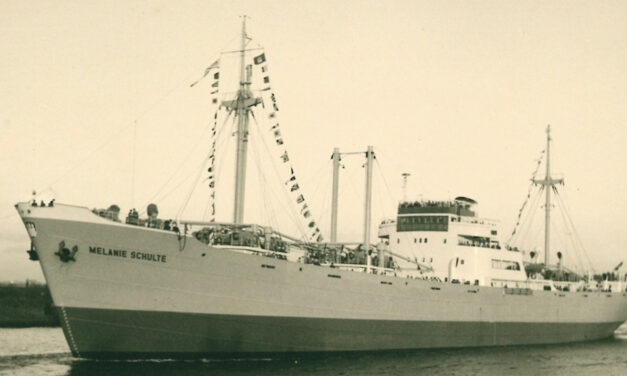
By hook or by crook: Sinking of the cargo ship Melanie Schulte

Shortly before Christmas 1952, the cargo ship Melanie Schulte disappeared almost without a trace in the North Atlantic. The accident has now been reconstructed at the Helmholtz Centre Hereon. The sinking of the multi-purpose freighter Melanie Schulte west of the Scottish coast on the night of 21 to 22 December 1952 is considered one of the worst disasters in German merchant shipping after the Second World War. All 35 crew members lost their lives and it was not until weeks later that wreckage and a lifebuoy washed up on the Scottish coast. The parts indicated that the ship, which had a displacement of 10,000 tonnes, had broken apart. The Melanie Schulte, which only entered service on 9 November 1952...

Weiterlesen

Skirmishes in the Baltic Sea

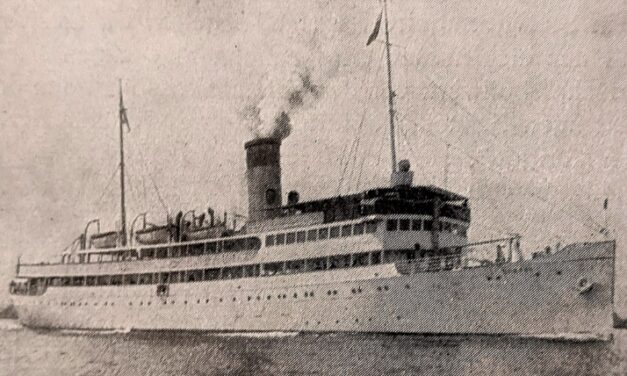
Nach Beginn des Zweiten Weltkriegs übernahm die Kriegsmarine das Bäderschiff Rugard. In den letzten Kriegstagen rettete es noch Tausende von Flüchtlingen und Soldaten. Wie viele andere deutsche Passagierschiffe wurde die am 13. März 1927 bei den Stettiner Oderwerken vom Stapel gelaufene und im Seebäderdienst eingesetzte Rugard im Zweiten Weltkrieg von der Kriegsmarine requiriert. Dabei war sie zunächst Flaggschiff und Versorgungsschiff, bevor sie schließlich als Führerschiff der 9. Sicherungsdivision zum Einsatz kam. In dieser Eigenschaft erlebte sie nicht nur das Kriegsende, sondern auch[ds_preview] ein Gefecht mit sowjetischen Schnellbooten, als sie als letztes Schiff der Kriegsmarine mit über 1000 Flüchtlingen und...

Weiterlesen
en_GBEnglish