Category: Technology

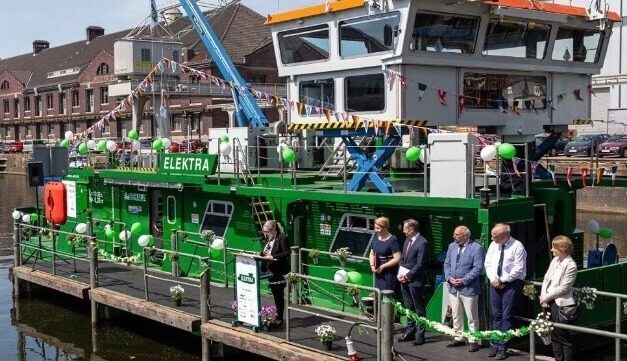
Hydrogen boats Elektra or Hydrotug: who will be first?

World's first hydrogen-powered push boat christened in Berlin by Franziska Giffey The world's first hydrogen-powered push boat, the "Elektra", was christened in Berlin. It took shipbuilder Hermann Barthel and his partners two years to develop this vessel. The ship is designed to make optimum use of the energy on board. In addition to the propulsion system, the hydrogen drive system provides heating for the cabins and wheelhouse. The waste heat from the fuel cells is utilised by continuous water cooling and the cabins are heated by a heat pump. With 750 kilograms of highly compressed hydrogen on board and a battery capacity of around 2,500 kilowatt hours, the push boat has...

Weiterlesen
Sailing again

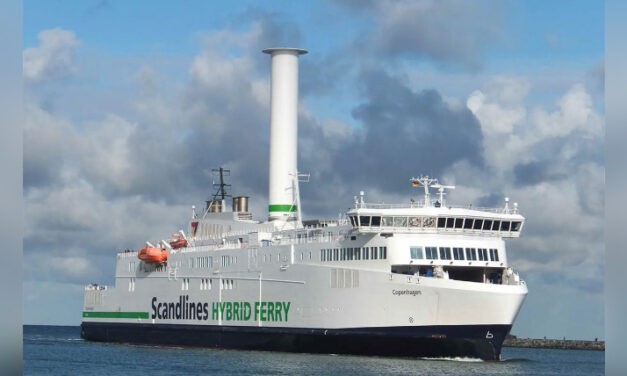
The Danish ferry operator Scandlines has installed a Norsepower rotor sail on another ferry. The company is increasingly focussing on wind-assisted propulsion systems in order to reduce fuel consumption and greenhouse gases. Since 2013, Scandlines has invested more than 300 million euros in the construction and conversion of conventional ferries into hybrid ferries. On the hybrid ferry "Copenhagen", which operates on the Rostock-Gedser route between Germany and Denmark, the ferry operator installed its first Norsepower Rotor Sail in 2020, which has been proven to achieve an average CO2 reduction of four per cent - on days with optimal wind conditions even up to 20 per cent. With the aim of becoming emission-free by 2040, the...

Weiterlesen

Schiebel Camcopter S-100 RPAS for the Danish Navy

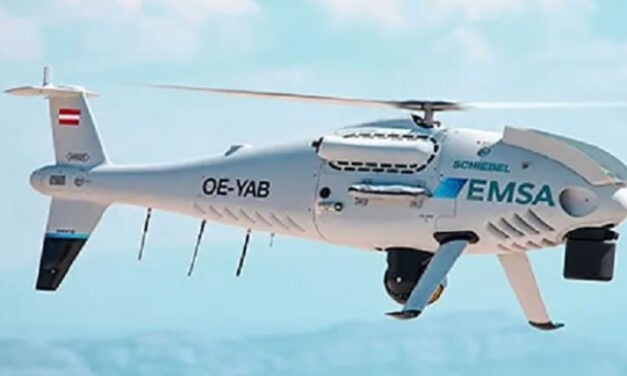
Danish Navy performs maritime surveillance tasks with Schiebel Camcopter S-100 RPAS The Royal Danish Navy (RDN) uses the Schiebel CAMCOPTER® S-100 for maritime surveillance. The RPAS (Remotely Piloted Aircraft System) service is provided by the European Maritime Safety Agency (EMSA). The CAMCOPTER® S-100 is based in Denmark's northernmost town of Skagen and supports the RDN and other national authorities in carrying out various maritime surveillance tasks, including the detection, verification and provision of information on potential oil spills and discharges at sea. All data collected during the flights is shared live via EMSA's RPAS data centre, so that users can see all the information they...

Weiterlesen

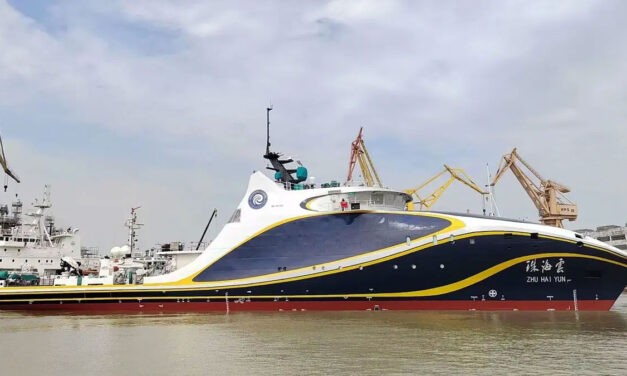
90 metre ship Zhu Hai Yun: Launch of an autonomous robot carrier in China

The ship actually looks more like an oligarch yacht with a somewhat unconventional East Asian design: in mid-May, the South China Morning Post reported eloquently on the launch of an almost 90 metre long ship named "Zhu Hai Yun" at the CSSC Huangpu Wenchong shipyard in Guangzhou in the hinterland of Hong Kong. However, it is not the spectacular design - it is the technical equipment and the equipment payload that make people sit up and take notice. As an autonomous platform with a large number of unmanned sensor carriers, the ship is intended to create a 3D image of a 100-kilometre disc of the sea surface, 4 kilometres upwards and...

Weiterlesen

VSM Annual Report 2021/2022

The current VSM annual report is available to view and download via the following link. As usual with the VSM, it contains an overview of current figures and topics from shipbuilding and marine technology. We are happy to pass on this excellent service. www.vsm.de/de/veranstaltung/vsm-jahresbericht-2022-auch-als-printausgabe...

Weiterlesen
en_GBEnglish