Category: Headlines

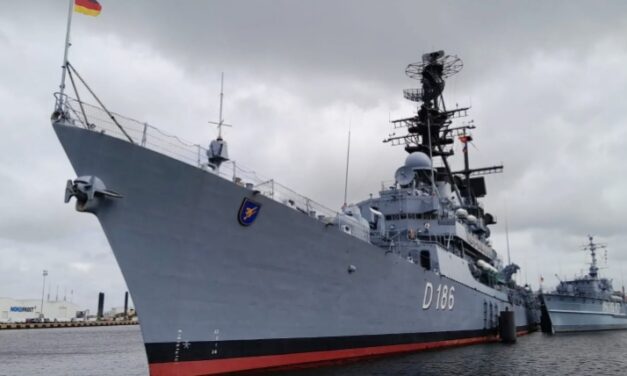
Wilhelmshaven - successful Pön-Ex for destroyer MÖLDERS

The museum ship "Mölders" has been the largest exhibit in the German Naval Museum (DMM) since 2005. Since then, a so-called Pön-Ex has been carried out regularly in spring and autumn. These are important maintenance campaigns in which former destroyer drivers support the DMM and carry out repairs and mending work. In the first week of May, almost 40 alumni from all over Germany gathered on board to give the "Mölders" another makeover. The Pön Ex crew was supported by some of the women who had travelled with them and the ship's dog Rocky. Rangeklotzt The results of this week-long work assignment are impressive. On the planned work stations (upper deck, outer skin and superstructure with...

Weiterlesen
Knowledge and skills: Training of operational naval officers

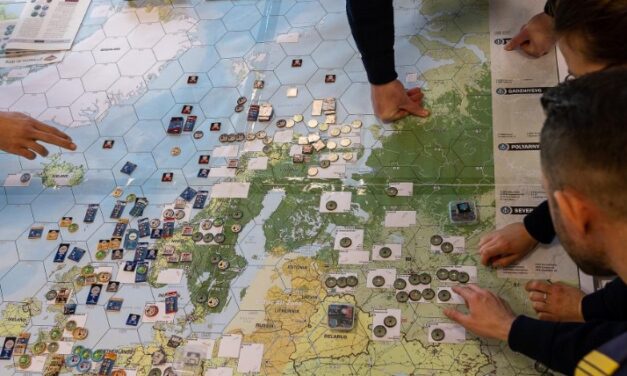
With the return to national and alliance defence, it is not only the main area of operation that is changing for the German Navy. It is also necessary to adapt operational officer training. NATO's strategic concept adopted at the Lisbon Summit in 2010 stated that "peace prevails in the Euro-Atlantic area". Relations with Russia were characterised by dialogue and the Bundeswehr's attention was primarily focused on the Afghanistan mission. Overall, the armed forces were primarily in demand worldwide in their role as crisis managers. For the navy, the ability to engage in three-dimensional naval warfare therefore took a back seat to international crisis management (ICM) operations. Accordingly, the...

Weiterlesen

Varied support: K3 Scout unmanned surface vehicle

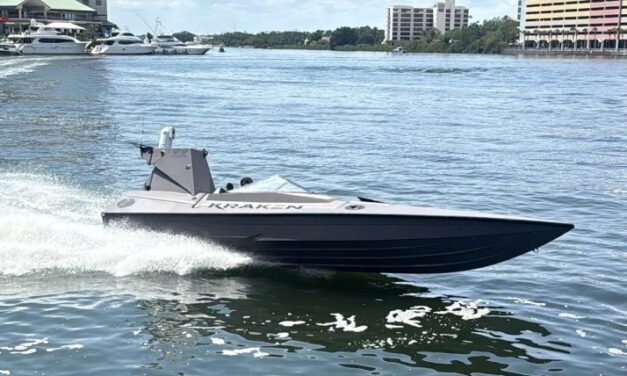
Immer mehr unbemannte Überwasserfahrzeuge werden für den Marineeinsatz entwickelt. Besondere Flexibilität verspricht eine britische Firma mit ihrem neuen Modell. Die britische Kraken Technology Group führte im Verlauf der Special Operations Forces Week Anfang Mai in Florida das unbemannte Überwasserfahrzeug (Unmanned Surface Vehicle, USV) K3 Scout vor. Das hochmoderne Fahrzeug zeichnet sich durch ein schlankes, hydrodynamisches Design aus, das eine besonders hohe Effizienz und Manövrierfähigkeit im Wasser ermöglicht. Der doppelt gestufte Rumpf reduziert den Wasserwiderstand und steigert die Lagestabilität, insbesondere bei[ds_preview] hoher Fahrgeschwindigkeit. Das USV ist für eine Vielzahl von Aufgaben geeignet, darunter Aufklärung und Überwachung, Unterwassererkundung, Überwachung von Küsten-...

Weiterlesen

More impact, more vision: The German Navy receives a new light naval gun

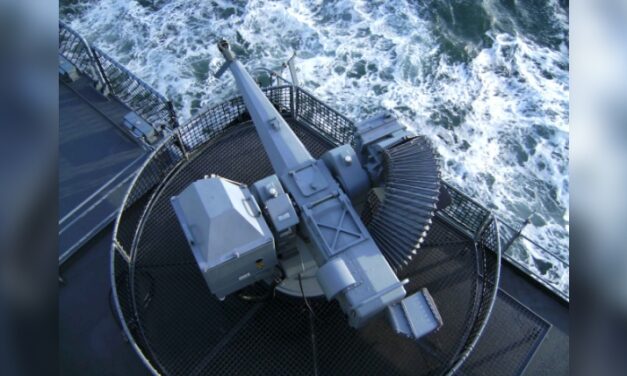
From revolver cannon to fragmentation cloud - a quantum leap in close-range defence Change of strategy in 30mm calibre The German Navy is initiating a significant change with the tender launched in June 2025 for the "cross-sectional follow-on naval light gun solution" (qNFMLG). The plan is to procure up to 175 new 30mm weapon systems including accessories and training services - starting in October 2026 and running until 2041. The focus is on the ability to defend against unmanned aerial vehicles (UAVs). The tender calls for systems that can fire and programme airburst munitions (ABM) - i.e. fragmentation charges that explode in flight and thus also effectively engage small, agile targets. The other...

Weiterlesen

Before BALTOPS: Russian navy in Skagerrak and Baltic Sea

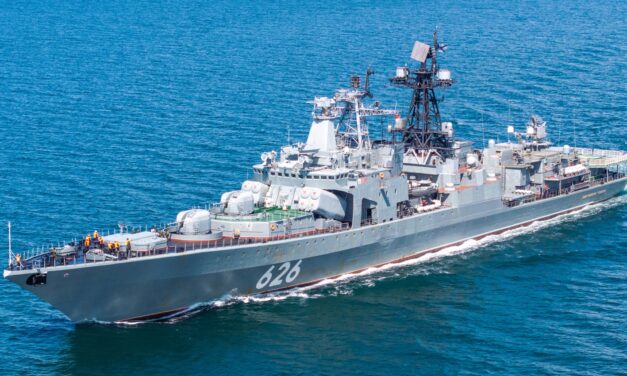
Russian naval activity in the run-up to BALTOPS 2025 in the Skagerrak and western Baltic On 20 May 2025, the Russian frigate "Admiral Kasatonov" (project 22350) left its home port of Severomorsk. Together with the Udaloy class destroyer "Vitse Admiral Kulakov" (Project 1155), it was sighted in the Skagerrak on 26 May. While the "Admiral Kasatonov" remained in the sea area, the "Vitse Admiral Kulakov" continued its journey through the Kattegat and the Great Belt into the western Baltic Sea. Analysts assume that the "Admiral Kasatonov" deliberately remained in the Skagerrak in order to obtain a situation picture of the deploying NATO forces in the run-up to BALTOPS....

Weiterlesen
en_GBEnglish