
Category: Armed Forces

Well equipped under water

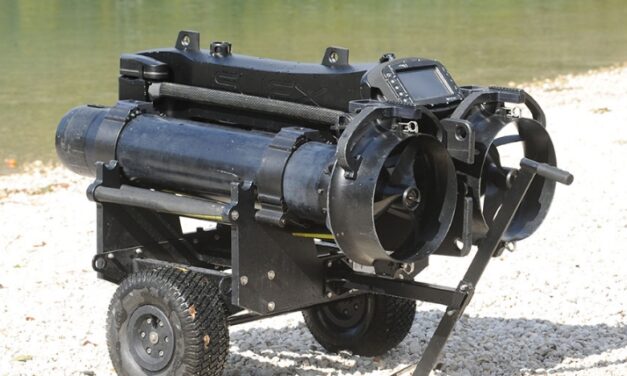
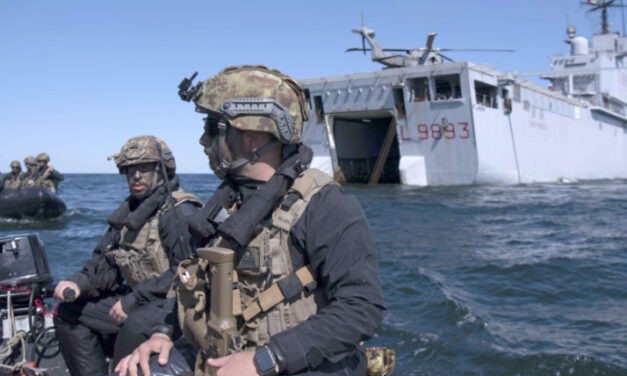
Maritime special forces require powerful and innovative equipment to operate efficiently. The industry offers a wide range of innovations. Combat swimmers are special forces that are specially trained to fight in and under water or move over water to fulfil missions on land. They can be easily distinguished from pioneer divers and amphibious special forces such as the German Special Forces Command (KSK) or the American Delta Force, as they are deployed on boats. There are actually only a few new trends and solutions to report when it comes to their personal equipment, although these have been constantly developed further. Rebreathers, which are among the most important items of equipment...

Weiterlesen
The German contribution

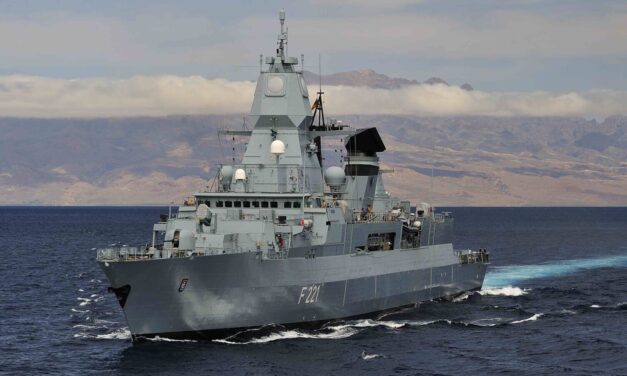
The publication of the Marine 2035+ target picture provides an opportunity to think more intensively about future German air defence frigates. Active defence against ballistic missiles will play a central role. After the planned end of the service life of frigates 124 between 2034 and 2036, the future frigate class 127 will contribute to the defence against ballistic missiles. In contrast to class 124, this will be achieved not only through its sensors, but in particular through its armament. In addition to BMD, it will also be capable of defence against hypersonic threats. The future class would therefore be a globally deployable weapon system for protecting a task force or theatre of operations against the entire spectrum of hypersonic threats.

Weiterlesen

Battle for the Baltic Sea - in the Baltic Sea?

Sollte es zu einer bewaffneten Auseinandersetzung mit Russland kommen, stellt sich die Frage nach dem Wo. Ist die Ostsee hierfür noch der geeignete Raum? Mit dem Beitritt Finnlands zur NATO und dem erhofften zeitnahen Beitritt auch Schwedens verändert sich die militärische Geografie im Ostseeraum signifikant. Raumordnung, Kommandostruktur und die gerade erst in der Erstellung befindlichen Verteidigungspläne auf operativer und strategischer Ebene werden dem Rechnung tragen müssen und diese maßgeblich beeinflussen – alles mit entscheidenden Auswirkungen insbesondere für die Bundeswehr. [ds_preview]Damit erhält auch eine seit mehreren Jahren nicht nur in der Deutschen Marine leidenschaftlich diskutierte Frage erneute Relevanz: Wird es...

Weiterlesen

If not now, then when?

The war in Ukraine has shaken our country out of a deep security-policy slumber. In the course of this awakening, we are rediscovering a self-evident fact that had been forgotten in the meantime: armed forces must be ready for deployment and combat and be able to wage war if deterrence fails. NATO has already reacted; deterrence and defence are the central elements of NATO's new strategic concept. This shift in focus also requires us to have combat-ready and assertive naval forces on the northern flank of the NATO alliance area. With the Navy 2035+ target vision, the Chief of Naval Operations has mapped out the path for our armed forces well into the next decade. On the strategic and military-political...

Weiterlesen

The turtle fleet

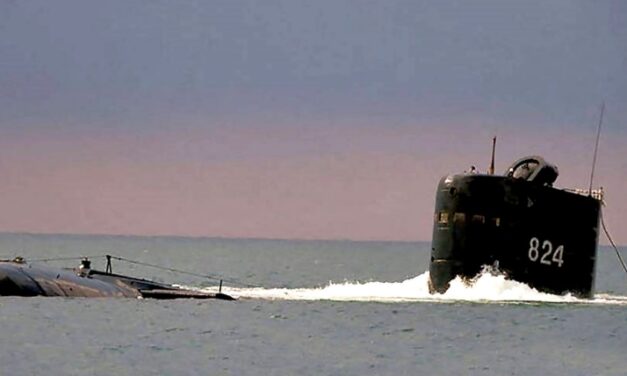
North Korean ruler Kim Jong-un is organising his armed forces ever more strategically. North Korea's navy is gearing up for an asymmetric war. At the end of the 16th century, Korea under Admiral Yi Sun-Sin deployed manoeuvrable, heavily armed ships that were also "armoured" with a bronze shield to successfully fend off various offensives by the much larger Japanese fleet. Due to their resilience, these units were known as "turtle ships". In the 21st century, North Korea is now also relying on an asymmetric fleet to offset the superiority of the much stronger fleets of South Korea, Japan and the USA. Pyongyang maintains much greater secrecy regarding its armed forces than Russia or China. Western...

Weiterlesen
en_GBEnglish