
Category: Marines from all over the world

Colombia - Launch of the Fassmer OPV

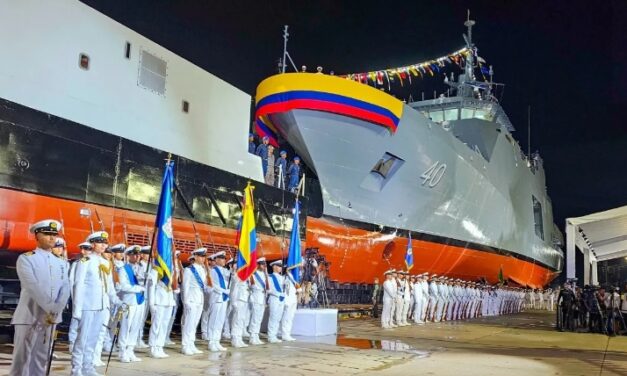
As a strategic hub between Central and South America, between the Caribbean and the Pacific, as well as the most important drug trafficking routes from South to North, Colombia has a small but very agile navy. The country receives a great deal of material support from the USA (guard boats) and South Korea (2 corvettes), as well as operational support from the USA. Germany was actively involved when four frigates were built at HDW in Kiel in the mid-1980s and German naval stocks were reduced after reunification in the 1990s. Today, all of this is "old" material. That is why Colombia is now trying its own hand, albeit based on design and technology from...

Weiterlesen
Canada - Life extension for Halifax frigates

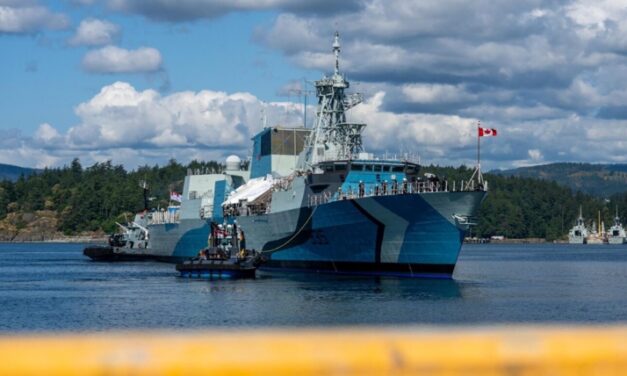
At the beginning of June, the Canadian frigate "Calgary" with its striking camouflage livery completed a general overhaul that lasted over two years - including the planning lead time and the reactivation phase that is now beginning, it will have been more than three years in the shipyard. She was the second unit of the twelve Halifax-class patrol frigates (135 metres, 4,800 tonnes) which, after thirty years of service and a minor mid-life modernisation, are being made fit again, but comprehensively, for their extended service life. They will be succeeded from 2030 by a modified Type 26 frigate, which is currently being built for the Royal Navy in Scotland. The next of the five Halifax frigates stationed on the west coast, "Winnipeg", is...

Weiterlesen

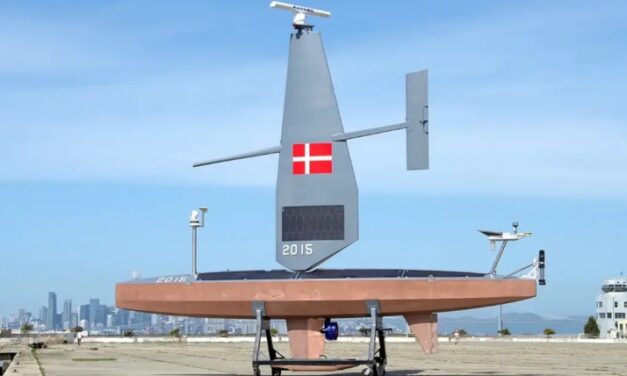
Denmark - autonomous guarding for Belte and Sund

Constantly under power, wind or sun, always wide awake, hear and see everything, under and above water, but never seasick! The Danish Ministry of Defence has put four Voyager naval drones from US manufacturer Saildrone into service in order to detect and fend off potential espionage and sabotage attempts on critical infrastructure at an early stage. The autonomous vehicles are electrically powered by wind and solar energy, allowing them to operate cost-effectively at sea for months without direct intervention. Autonomous control and navigation systems are installed to carry out autonomous military surveillance missions. Optical, acoustic and infrared sensors, including radar and sonar, provide data that can be analysed using artificial intelligence and machine learning.

Weiterlesen

Argentina - wants to buy "queens of the sea" and abolish its "flying ducks"

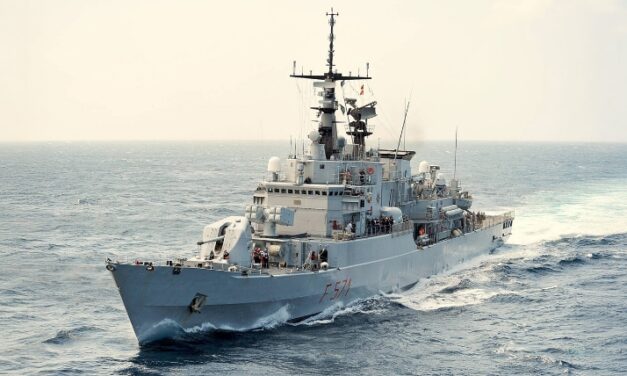
A national magazine described them as the "queens of the seas", the last two of the eight Maestrale-class frigates (123 metres, 3,000 tonnes) from the 1980s that the Argentinian Ministry of Defence is negotiating with Rome to purchase. Predominantly equipped with underwater weapons, the frigates built by Fincantieri were the backbone of submarine hunting in the Mediterranean for a good 40 years. "Grecale" and "Libeccio" were decommissioned last year and could still provide good service in South America for a few years after a refit - their mid-life conversion also took place twenty years ago. Not exactly cheap to maintain due to their age, but thanks to...

Weiterlesen

China's new helicopters for on-board use

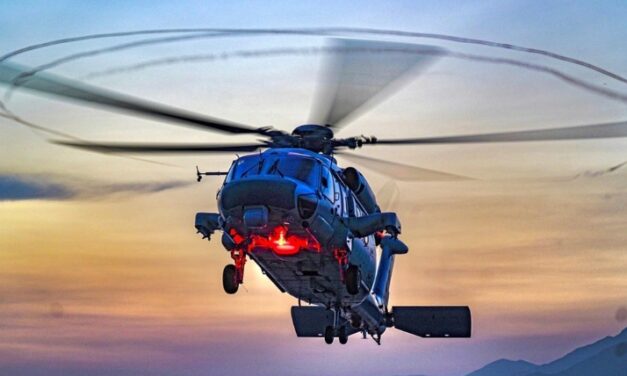
After the navalised Z-20J variant of the Chinese transport and multi-role helicopter Harbin Z-20 was presented to the public at the Zuhai Airshow in November 2024, this flight type was already shown on board the amphibious assault carrier "Hainan" (Type 75, 237 metres, 31,000 tonnes) during on-board operations in the Chinese media in mid-2025. The Seahawk equivalent (Sikorsky SH-60R/S, four-bladed rotor) equipped with a five-bladed rotor fills the operational gap between the heavy Z-8 (replica French Super-Frelon) and the light Z-9 on-board helicopter (replica Aerospatiale Dauphin). The Z-20J extends the amphibious capabilities of the PLA-N and makes up for a backlog of twenty years. Another variant, the Z-20F, is designed for...

Weiterlesen
en_GBEnglish