Category: Technology

The weapons count

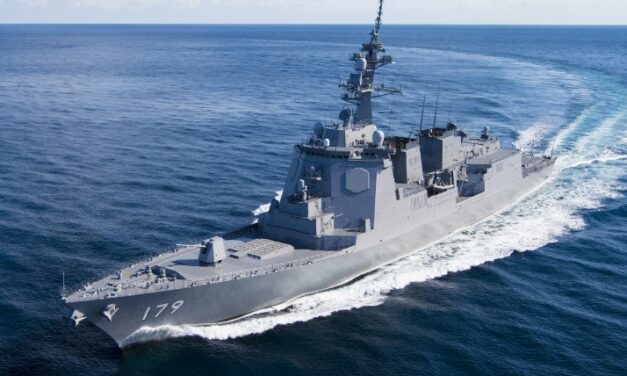
With the ASEV, the Japanese navy is introducing its heaviest class of warship equipped with guided weapons to date. The ships are designed for the future use of laser and railgun weapons. The Japanese Navy (internationally known as the JMSDF or Japanese Maritime Self-Defence Force) currently has eight guided-missile destroyers, including two units of the Maya class, which were launched in 2020. The eight destroyers are multi-purpose combat ships and all have the AEGIS command and control system as well as the AN/SPY-1D fire control radar. Among other things, the ships are armed with SM-3 missiles, which are designed to combat ballistic missiles including medium-range missiles (Anti-Ballistic Missile - ABM). By 2032, the Japanese Navy plans to have two...

Weiterlesen
Autonomous naval boats: The self-employed

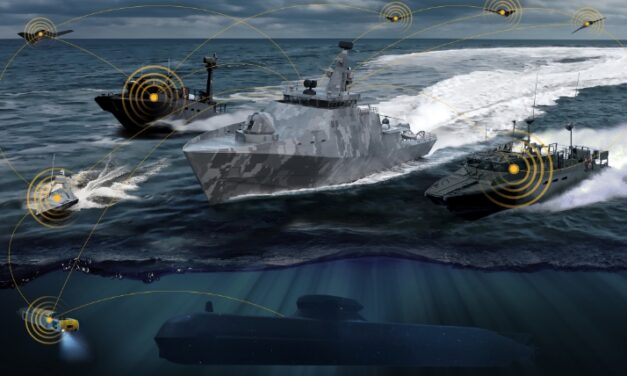
Many companies are developing new combat boats or equipping tried and tested ones with modern technology for autonomous use. One of the pioneers is Team Germany with Tamsen, Hagenuk and Hensoldt. In the wake of changing security policy challenges and the changing requirements for modern maritime operational concepts, the further development of combat and operational boats is becoming increasingly strategically important. At the same time, the development of autonomous maritime systems is progressing rapidly. State-of-the-art sensor technology, AI-supported data processing and autonomous control systems are revolutionising military and security-related ship operations. Many nations are increasingly relying on unmanned systems, particularly in the areas of border protection, reconnaissance and tactical operations. Autonomous mission boats are playing a key role in increasing the speed of response,...

Weiterlesen

Autonomy in battle

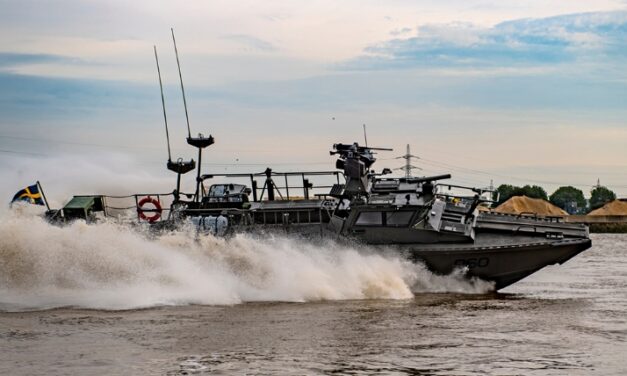
With the CB 90, Saab offers a powerful combat boat. The integration of the Autonomous Ocean Core now opens up further potential uses. With the CB90 (CB stands for Combat Boat) from its subsidiary Docksta, Saab is demonstrating how a unit originally designed for manned operation can be optimised for uncrewed operation with the help of autonomous technologies. CB90 is already in service with several navies for amphibious, littoral and riverine operations. In addition to the Royal Swedish Navy - where it is primarily used for amphibious purposes - the CB90 is also used by the US Navy.

Weiterlesen

Just one ping: WTD 71 revolutionises sonar performance analysis

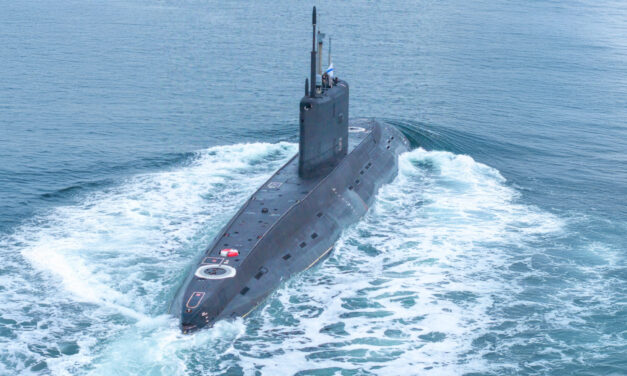
Submarine hunting is a highly complex business. In order to remain at the cutting edge of technology, WTD 71 is developing a demonstrator for modern sonar performance analysis. Sonar performance analysis is an important tool in submarine hunting and in determining the betrayal range of own submarines against possible enemy detection. It predicts how reliably and up to what distance a potential underwater target can be detected by an active or passive sonar system. In the case of an active sonar system, a sonar ping is emitted at a specific source level. It travels through the water and loses intensity due to various propagation effects, resulting in a loss of propagation. After reflection at the...

Weiterlesen

The enabler

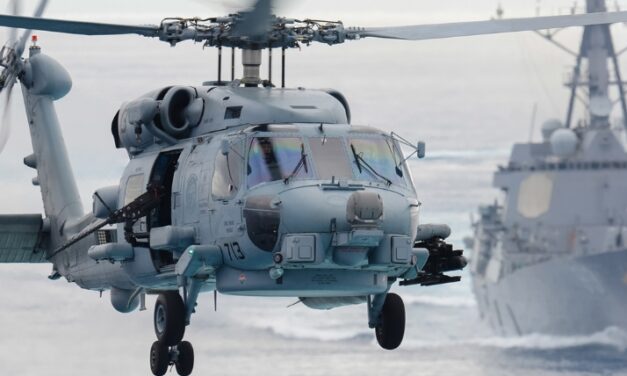
Die US Navy benötigt Helikopter für eine breite Palette unterschiedlicher Einsätze. Mit der Sea-Hawk-Familie steht ein multifunktionaler Typ bereit. Während der 1970er-Jahre sah sich die US Navy nach einem Nachfolger für die in die Jahre gekommenen U-Jagd-Helikopter des Typs Kaman SH-2 Sea Sprite um. Dabei ging es vornehmlich um das neu zu entwickelnde Light Airborne Multi-Purpose System III (Lamps III), das sowohl Luft- als auch Schiffssysteme integrierte. IBM Federal Systems wurde dabei von der US Navy als der Hauptvertragspartner ausgewählt. Da der Sea Sprite nicht mehr groß genug war, um[ds_preview] die in Zukunft benötigten Ausrüstungen für die neuen Aufgaben...

Weiterlesen
en_GBEnglish