Category: Shipbuilding

German offshore wind industry sets an example

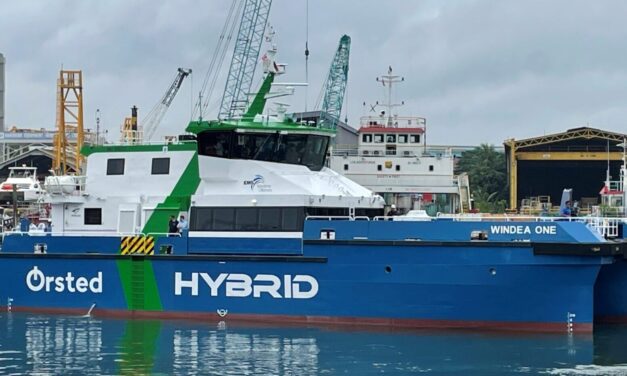
In June 2023, EMS Maritime Offshore GmbH (EMO) from Emden christened its latest ship, the WINDEA ONE, as the first parallel hybrid crew transfer vessel (CTV). In future, it will transport personnel and materials from Norden-Norddeich to the Borkum Riffgrund and Gode Wind wind farms (off Norderney). The offshore wind turbines will be operated by the Danish company Ørsted, which has chartered the ship from EMO on a long-term basis. International co-operation The ship was built by the Penguin Shipyard Group in Batam, Indonesia, under the name WindFlex-32 and is based on a design by the Australian engineering firm Incat-Crowther. It is already the fifth ship that the AG EMS Group, to which EMO also belongs, has commissioned...

Weiterlesen
Bremerhaven: Construction of converter platforms?

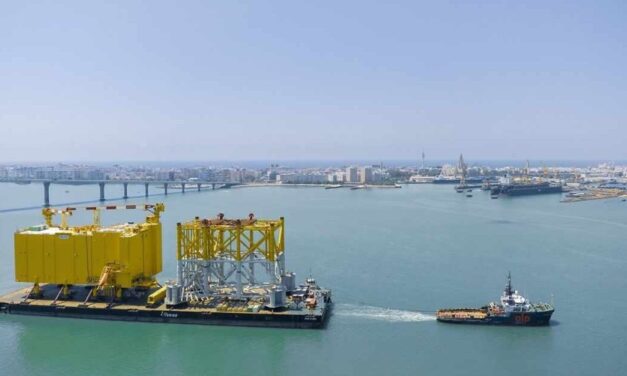
Offshore wind farms require the energy from the wind turbine generators (alternating current) to be transported via cables under the sea and then converted to direct current on land at the point of generation - as this is significantly less lossy over long distances. This conversion takes place in very voluminous converters that are anchored deep in the ground on high stilts near the wind farms, standing above the waves. These platforms, measuring an impressive 70 x 30 x 30 metres in length/width/height, are located around 20 metres above the surface of the water and reach up to 60 metres into the ground with their anchoring. Converters in Germany Currently...

Weiterlesen

SeeElefant - maritime plastic recycling made in Germany

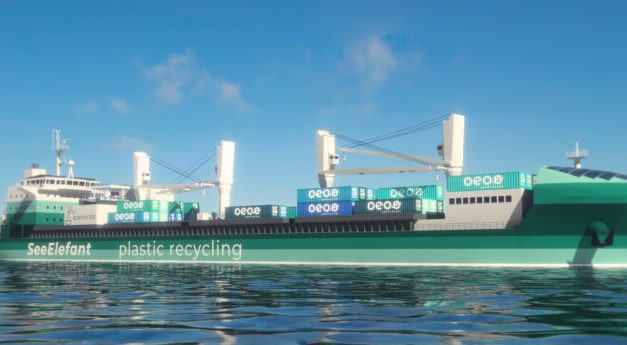
"One Earth - One Ocean", OEOO - eine deutsche Non-Profit-Umweltorganisation - hat in 2022 ihre Idee zum Konzept weiterentwickelt, bei dem ein gebrauchtes Frachtschiff umgebaut und zu einem mobilen Recycling- und Energieerzeugerschiff in entlegenen Metropol- oder Vermüllungsregionen seine Arbeit aufnehmen soll.[ds_preview] Der "SeeElefant" ist eine von Umweltministerium, Umweltbundesamt und dem Deutschen Nachhaltigkeitspreis ausgezeichnete Konzeption zum maritimen Recycling. Das "initial design" für einen knapp unter 200 Meter langen Bulk-Carrier mit vier Kränen, das sogenannte Prozessschiff, ausgelegt für eine Verarbeitungskapazität von 60.000 Tonnen maritimen Plastikmüll pro Jahr, das aber auch nach Festmachen über die Pier landseitigen Müll verarbeiten kann, wurde im...

Weiterlesen

Fleet service boats class 424

The ten armaments projects approved by the Budget and Defence Committee of the German Bundestag on 6 July include three fleet service boats, including a training and reference facility. On 10 July 2023, the amendment contract was then signed between the President of the Federal Office of Bundeswehr Equipment, Information Technology and In-Service Support (BAAINBw), Annette Lehnigk-Emden, and Tim Wagner, CEO of the NVL Group, which is acting as the contractor. Planning history Back in June 2021, the contract for the procurement of three Class 424 fleet service boats with a reconnaissance training and reference system was signed between the BAAINBw and NVL B.V. & Co. KG, at that time still...

Weiterlesen

Scrubbers are not environmental angels

Researchers at Chalmers University of Technology in Sweden have discovered that the wash water from exhaust gas cleaning systems (scrubbers) on ships is the main cause of environmental pollution in harbour areas. The environmentally hazardous metals and other toxic substances washed out of the exhaust gas are no longer released into the atmosphere, but into the water, including harbour waters. Emissions Each ship is responsible for various types of pollutant discharges. These include grey water from showers, black water from toilets, antifouling paints and exhaust gases from ship propulsion systems. Standards In order to meet the requirements in the European Sulphur Emission Control Areas (SECA) and the requirements introduced by the International Maritime Organisation (IMO) in 2020, it is necessary to...

Weiterlesen
en_GBEnglish