Category: Shipping

MAN - First ammonia engine before installation

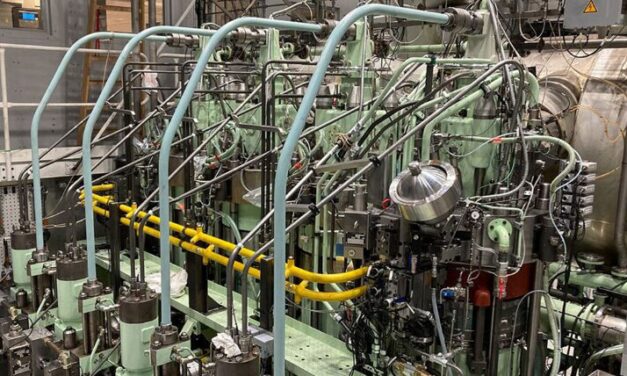
The shipping industry transports around 90 % of global trade and is therefore responsible for around three per cent of global carbon dioxide emissions. Reason enough to research ammonia as one of several alternative fuels. Test phase MAN Energy Solutions (MAN ES) is planning to install the first ammonia-powered engine on a new ship in Japan before the end of this year. The subsequent testing of the dual-fuel engine will take one to two years. If the two-stroke ammonia marine engine is successfully tested, MAN will have reached a milestone, but at the same time intensive investments will have to be made in fuel supply and bunker infrastructure and further safety standards will have to be created, according to the MAN ES CEO, who...

Weiterlesen
Remote-controlled inland navigation

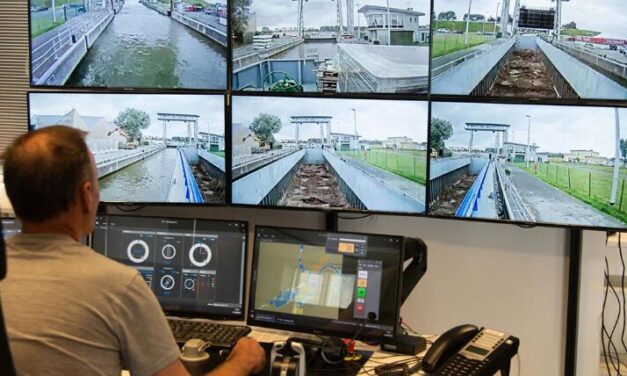
Duisburg: Now that the first pilotless "ghost ships" are sailing on Belgium's waterways, ships are set to follow on German waterways. In future, the captains will no longer be on board, but on land. For a few weeks now, a Belgian captain has been sitting at a desk in the former Haniel offices in Duisburg-Ruhrort. With headphones in front of four computer terminals and six camera screens, he steers an inland freighter across the Belgian Plassendale-Nieuwpoort Canal and the River Yser, over 300 kilometres away. Two controllers are all the Fleming needs to keep the unmanned "Watertruck 8" loaded with excavated earth on course. Skilled labour shortage In the Duisburg control centre, this is the first time that the...

Weiterlesen

USA Environmental protection: "Clean Ports Programme" worth billions

The US Environmental Protection Agency (EPA) has launched a €2.8 billion programme for clean ports. The programme aims to invest in zero-emission port equipment and infrastructure to help tackle the climate crisis and improve air quality. Decarbonisation The climate investment is intended to reduce pollution from fossil fuels in US port logistics and replace it with clean technologies such as electrification and hydrogen fuel cells. At the same time, port workers and the population are to be protected from harmful air pollution and well-paid jobs are to be created, including jobs that do not require a university degree. This programme was launched in 2022 as part of the Inflation Reduction Act, a subsidy programme for manufacturing in...

Weiterlesen

"Gorch Fock" leaves Kiel for Africa

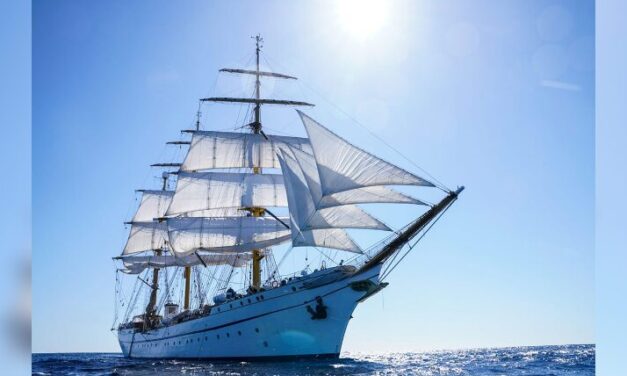
From a press release by Rostock Naval Command On Friday, 8 March 2024 at 10 a.m., the German Navy's sail training ship will leave its home port of Kiel to begin its 177th overseas training voyage (AAR). This time, the barque will only set sail with its regular crew. 115 officer cadets from the 2023 crew will not board until 22 March 2024 in the Spanish port of Gijon. The voyage will take the "Gorch Fock" on to Tangier (Morocco) and Porto (Portugal), where the crew change will take place and "new" officer trainees will come on board. Cadets from France, Ghana, Cameroon, Colombia, Senegal, Thailand and Togo will take part in the training programme.

Weiterlesen

Germany's seaports: too small for offshore offensive

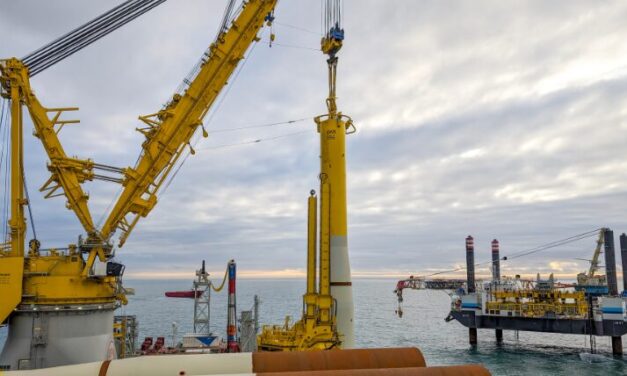
In the coming years, Germany wants to erect new, large wind turbines off its own coast. However, there is a lack of space for the huge components in the seaports. Gigantic dimensions According to the German government, offshore wind power is to be expanded to a capacity of 30 gigawatts (GW) by 2030 and 70 GW by 2045. This corresponds to an expansion of a further 60 GW within the next 21 years. According to industry figures, this will require up to 7,000 new offshore wind turbines to be installed. At 300 metres, they are almost as high as the Eiffel Tower and stand on foundations weighing 2,500 tonnes...

Weiterlesen
en_GBEnglish