








The challenge
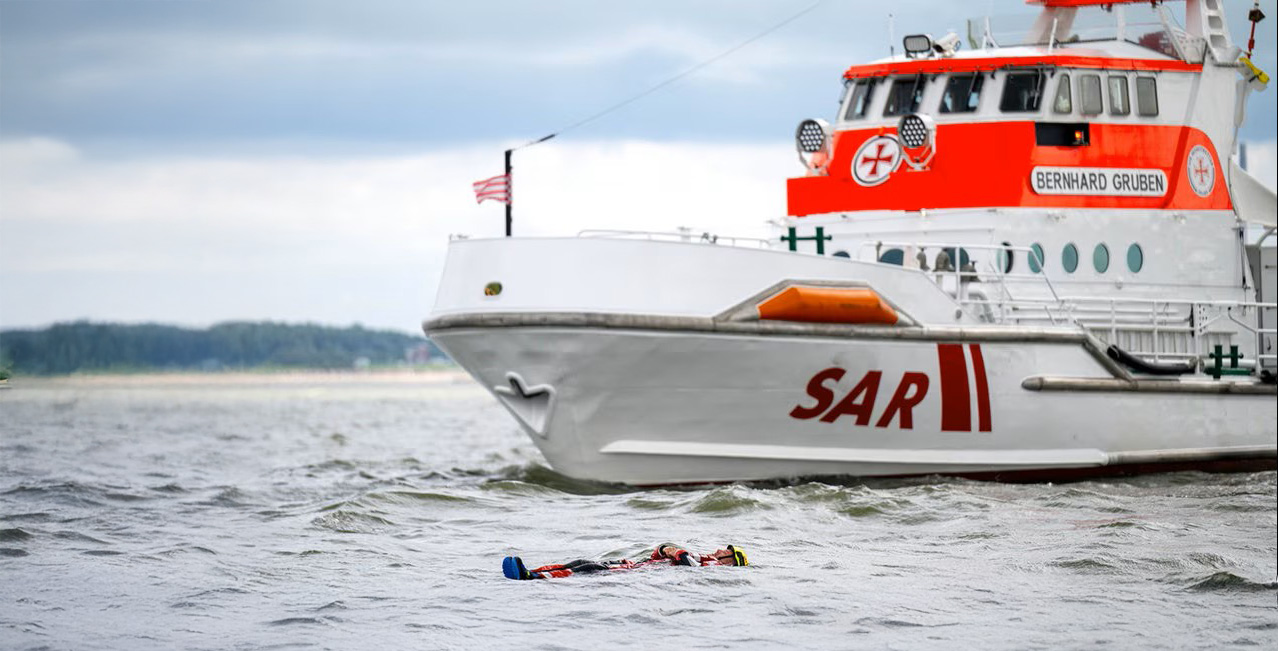
Auf Distanz, bei schlechter Sicht und bei Nacht kommen die Augen aller Seenotretter und Seenotretterinnen schnell an ihre Grenzen. Zwar können Infrarotkameras und Restlichtverstärker größere Objekte gut entdecken. Aber[ds_preview] Menschen im Wasser sind zu klein, insbesondere wenn nur der Kopf herausschaut. In digitalen Bildern nehmen diese „Objekte“ deshalb oftmals nur wenige Pixel ein. Ob es sich dann um ein Störsignal oder eine Person handelt, können die Systeme nicht immer zuverlässig darstellen.
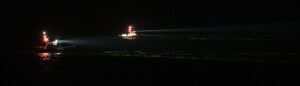
Sea rescue vessels on a night-time search exercise. BSH / Jörn Kallauch
Objective
The BSH and the DGzRS signed a corresponding agreement in Hamburg at the beginning of December 2024 to test the project with more powerful sensors and more precise data processing under realistic conditions at sea and with people swimming. In future, such systems could also be used on merchant ships to constantly monitor their surroundings and report obstacles such as tree trunks, containers or even life rafts.
In addition, the BSH and DGzRS intend to improve the range of life-saving equipment lights and the performance of electro-optical systems such as night vision devices so that people who have fallen overboard can be found better and more quickly even without the newly developed camera systems.
kdk, NDR




 English
  German
0 Kommentare