Category: Armed Forces

Kiel defies all upheavals

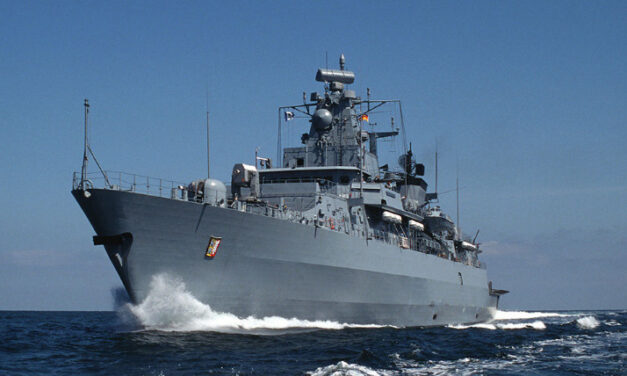
Geography determines the strategic and military policy significance of the navy, which is stationed in and around Kiel, the capital of Schleswig-Holstein, to a disproportionately high degree. As a strategic partner, Kiel's naval shipbuilding companies are highly relevant in terms of security, economic and employment policy as well as technology. Kiel has traditionally been closely associated with the navy. This goes back to two epoch-making strategic military decisions that still shape the city today: firstly, the decision of the Frankfurt National Assembly on 14 January 1848 to build the first German imperial fleet, with Kiel becoming the main war port of the German navy, and secondly, the order issued to the city of Kiel on 24 March 1865 immediately after the end of the German-Danish War...

Weiterlesen
The naval arsenal mobilises

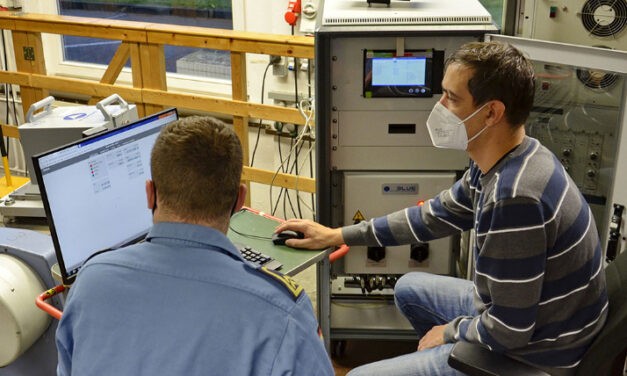
On board the floating units, the servicemen and women are to carry out more repairs themselves again. They receive support from the naval arsenal. In this day and age, you might ask yourself what the headline is supposed to mean. Is the naval arsenal calling in reservists for support? Has it recently started using its own boats in order to be more mobile? To answer these questions, a short preface is necessary. The Inspector General of the German Armed Forces, General Eberhard Zorn, has commissioned the Navy to take the lead in addressing the issue of immediate repairs in order to increase operational readiness. By January 2021, cooperation with the Naval Arsenal (MArs) in...

Weiterlesen

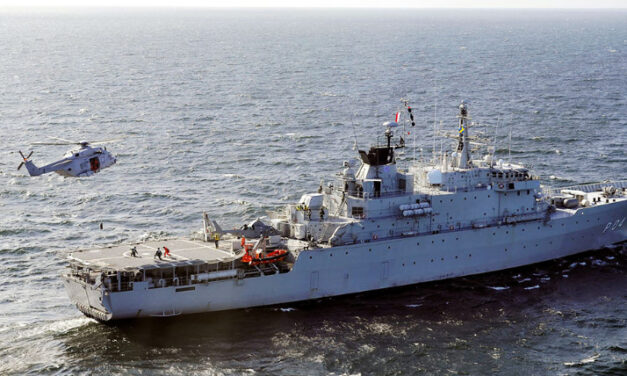
Small forces, big impact

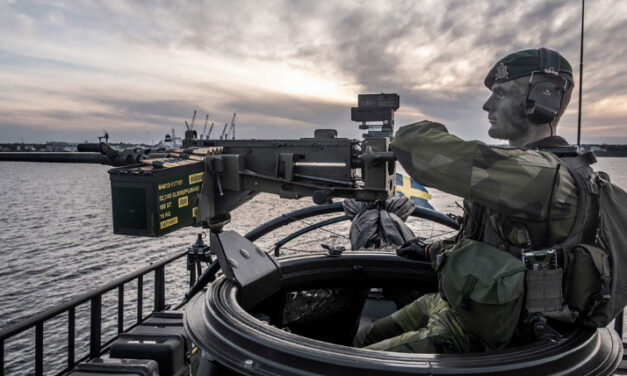
The Swedish navy also reduced the number of its units after the end of the Cold War. However, Putin's annexation of Crimea in 2014 prompted those responsible to change their minds. On 18 May, the Swedish government officially submitted its application to join the NATO defence alliance. At the same time, NATO headquarters in Brussels received an application for membership from neighbouring Finland. In addition to the two Scandinavian countries, NATO itself will also benefit greatly from the accession - once all hurdles have been cleared and all 30 existing NATO member states have given their approval. Both countries bring modern and highly trained armed forces to the alliance, whose respective priorities...

Weiterlesen

Smoke on the Water

Every soldier on board must be able to fight a fire. High-quality, multi-stage training is therefore essential. The Naval Damage Control Training Centre in Neustadt in Holstein is a training facility of the German Navy. Training is provided in operational and basic training as well as by the specialised medical services group. Operational training is responsible for training the crews of seagoing units and basic training is responsible for training divers and damage defence forces, among other things. Why does the German Navy go to such lengths and maintain its own training centre? The answer lies in the special features of seafaring on military units. Safe participation in maritime traffic is...

Weiterlesen

Sweden's navy on course for the future

Sweden is currently experiencing a profound change in security policy, which will strengthen the country's navy in the long term after years of cutbacks and make it a valuable partner in the NATO alliance. Russia's aggressive behaviour towards Ukraine since 2014 has heralded an early turnaround in security policy in Sweden, which is also making itself felt in the country's navy. The revitalisation of missile-based coastal protection by the naval infantry in 2016, the re-conscription of conscripts to the navy since 2018, the reopening of the Muskö naval base the following year and the planned relocation of the naval staff here this year are just a few signs of a security policy upheaval in Sweden.

Weiterlesen
en_GBEnglish