
Category: Security policy

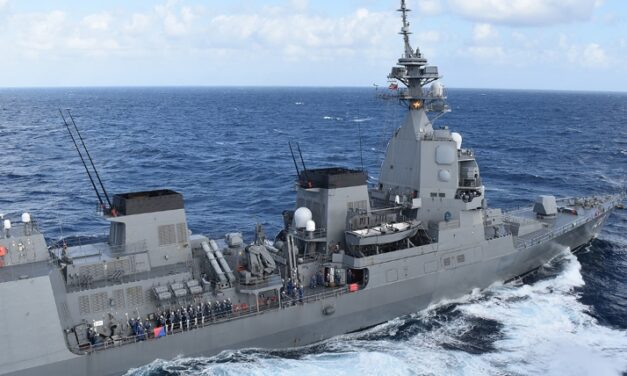
New security policy constellation in East Asia: Japan takes centre stage

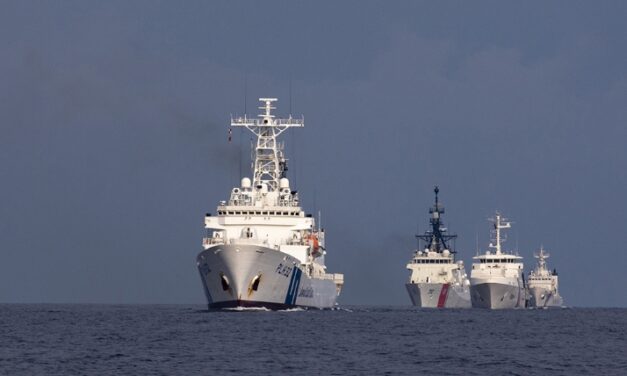
One of the most significant developments in the Western Pacific is Tokyo's emerging rapprochement with Seoul and Manila in terms of security policy. Even after almost 80 years, the resentment from the Second World War and the decades before is still very much alive in East Asia. This is particularly pronounced in South Korea and the Philippines, where many people still harbour negative attitudes towards Japan and the dispute over war-related reparations payments continues. This circumstance has also characterised the security policy relations between these countries to date. However, the dual threat from China and North Korea has recently led to a rethink. There is a growing realisation that the time has come...

Weiterlesen
Calling challenges by name

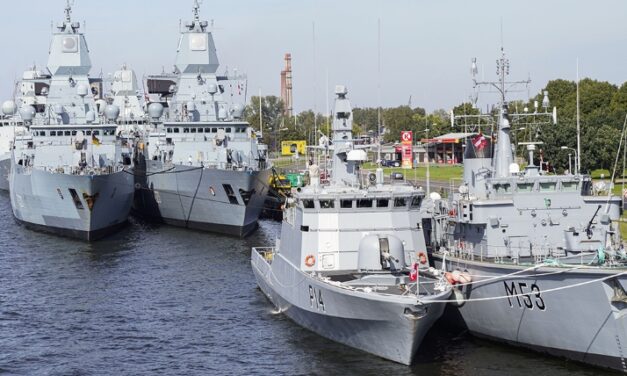
For almost a decade, the Baltic Commanders' Conference has provided a platform for western Baltic Sea neighbours to exchange experiences. The aim is also to jointly implement projects. Kiel-Wik naval base, middle of the last decade. Two flag officers, both former speedboat drivers and therefore at home in the Baltic Sea, one commander of the fleet, the other flotilla commander, stand in the staff building of Flotilla 1 and look out over the berths at the base. There are far too few boats to practise demanding scenarios on their own in addition to their ongoing duties. Too little capacity to organise complex, multi-dimensional training projects. Admittedly, this is not a fundamentally new...

Weiterlesen

Strengthening maritime co-operation in the Indo-Pacific region and the role of Japan

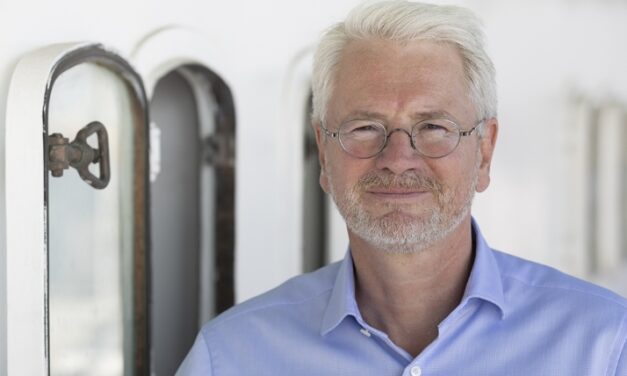
With an increasingly aggressive China, westernised Japan has an important role to play in the Indo-Pacific. Under its leadership, a collective security alliance could be created in the region. I retired from the Japanese Self-Defence Forces in 2009 after serving as Chief of Staff of the General Staff. Fifteen years have passed since then, and during that time a tsunami caused a major disaster in eastern Japan. There was also a global pandemic caused by Covid-19. Humanity still does not have the wisdom or the ability to control and prevent such major disasters. On the other hand, we believed that...

Weiterlesen

 "What does the Black Sea teach us?"

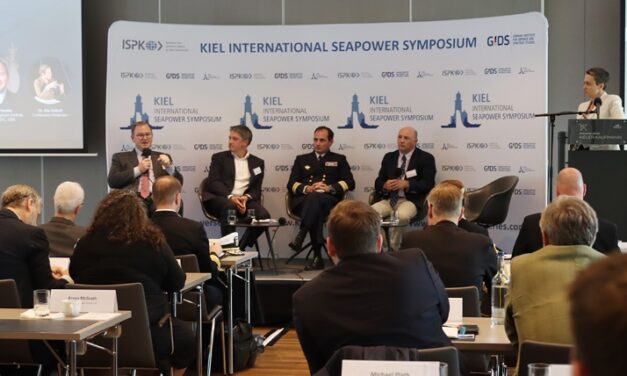
Für die sicherheitspolitische Gemeinschaft stellt das Kiel International Seapower Symposium alljährlich ein Highlight dar. Es bietet Akademikern und Praktikern eine hervorragende Möglichkeit zum Wissensaustausch. Unter dem Motto „(Re-)Learning War – Lessons from the Black Sea“ veranstaltete das Institut für Sicherheitspolitik an der Universität Kiel in diesem Jahr erstmalig gemeinsam mit dem German Institute for Defence and Strategic Studies das Kiel International Seapower Symposium (KISS). Traditionell fiel die hochkarätige Tagung mit dem Auftakt zur diesjährigen Kieler Woche und dem Hafenaufenthalt der Teilnehmer des jährlichen Marinemanövers Baltops zusammen.[ds_preview] Seit 2015 bietet das Symposium eine Plattform zum Austausch in der zivil-militärischen Zusammenarbeit...

Weiterlesen

The general shipbuilding policy situation - a question of safety

Die kürzlich stattgefundene SMM-Messe war ein globaler Treffpunkt für maritime Technik und Kommerz. Auf der Konferenz MS&D, Maritime Security and Defence, wurden wichtige geopolitische Themen behandelt, die in der maritimen Wirtschaft von großer Bedeutung sind. Bislang war der Auf- und Abstieg großer Schiffbaunationen – von Großbritannien über Kontinentaleuropa und Japan bis zu Korea – stark mit industrie- und handelspolitischen Rahmenbedingungen und Einflussnahme verbunden. Im Fall von China zeigt sich ein differenziertes Bild. Der Einsatz enormer staatlicher Finanzmittel, die Schätzungen sprechen von rund 200 Milliarden Dollar in gut einem Jahrzehnt, lassen sich nur mit geostrategischen Aspekten schlüssig erklären:[ds_preview] Die Schiffbauindustrie...

Weiterlesen
en_GBEnglish