
Category: Headlines

China strengthens its presence in the polar regions

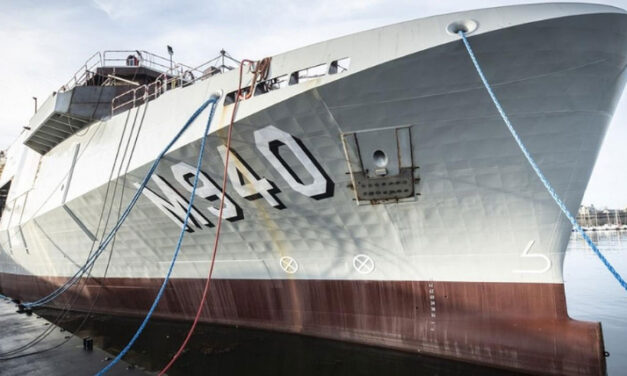
China is expanding its expeditions to the Arctic and Antarctic. According to the Chinese Ministry of Natural Resources, the national polar observation and monitoring network is being continuously improved and the construction of the fifth Antarctic research station "Inexpressible Island" on the edge of the Ross Sea is being accelerated. In the meantime, the 40th Antarctic expedition is being prepared and the 13th mission in the Arctic Ocean has been completed. Read more about the 5th Antarctic research station in our article "Satellite photos: China on the advance in the Antarctic" from 15 May 2023. Read article The 39th scientific Antarctic expedition from October 2022 to April 2023 lasted 163 days. 255 researchers on two research icebreakers, Snow Dragon (Xue Long) and Snow Dragon 2,...

Weiterlesen
ASEAN/Indonesia backs Code of Conduct for South China Sea

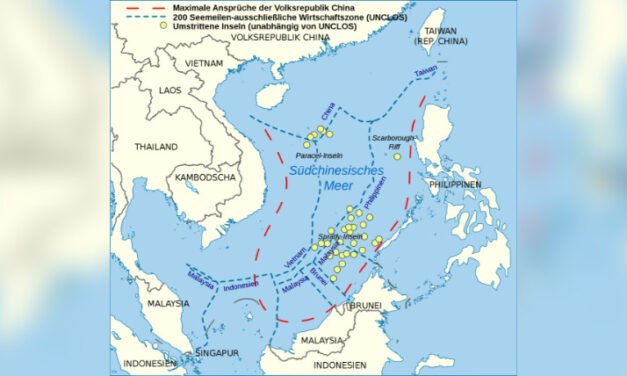
The East Asian island state is chairing the Association of Southeast Asian Nations (Asean) this year and wants to use its opportunity to at least agree a code of conduct with China for the highly controversial South China Sea. The guidelines for a Code of Conduct (CoC) drawn up by Indonesia were adopted by the Director of the Office of the Central Committee for Foreign Affairs of the Chinese Communist Party in Jakarta in mid-July. The ten Asean countries and China now aim to finalise the CoC negotiations within three years. It is the first multilateral attempt to resolve the escalating dispute in the South China Sea. The code of conduct is intended to harmonise national...

Weiterlesen

Environmentally friendly fuels - healthier, but not more climate-friendly

Since 1 January 2020, the entire shipping industry has become "greener" thanks to "Sulphur 2020" At the turn of 2020, the IMO banned cheap but dirty heavy fuel oil with a high sulphur content. The shipping industry had two options to react: Switch to light fuel oil (marine diesel with lower sulphur and heavy metal content) or install an exhaust gas purification system (scrubber). The majority of shipowners opted to switch to alternative marine fuels or liquefied natural gas (LNG). The aim of the regulation was to significantly reduce sulphur emissions. The permissible sulphur content of marine fuels was reduced from 3.5 % to 0.5 %. Sulphur emissions (SOx) are held responsible for the development of respiratory diseases and are a component...

Weiterlesen

Royal Navy sells legacy assets - reuse or scrap

The Royal Navy had held on to old, decommissioned hulls for reserve purposes for years. This surplus tonnage is now to be rapidly reduced, as it also costs personnel, money, time and berths. The recycling company of the British Ministry of Defence has drawn up a five-year plan for this and will begin selling four ships this year exclusively for material recycling. In addition to a minesweeper, the first lot includes the much-travelled Type 23 frigates MONTROSE and MONMOUTH as well as the Type 82 destroyer BRISTOL - a single ship with air defence duties for an aircraft carrier class that was never built - which entered service in 1973. In 1982, the BRISTOL led the two-destroyer air defence force in the Falklands...

Weiterlesen

France joins Belgian-Dutch mine action programme

At the end of August - as the defence ministers of Belgium and the Netherlands announced on their social media channels on the fringes of the EU defence ministers' meeting in Toledo - France finally joined their joint rMCM minesweeper programme. The development was not entirely unexpected: the navies of the three countries have been operating mine warfare units as part of the TRIPARTITE programme since the 1980s and had already come much closer together on the issue of a successor programme last year. Paris had originally intended to develop its future SLAM-F mine defence system together with London and in cooperation with Thales and Saab. However, during the Euronaval 2022 trade fair, the - probably also due to...

Weiterlesen
en_GBEnglish