
Category: Technology

Europe's shipyards continue to lose market share

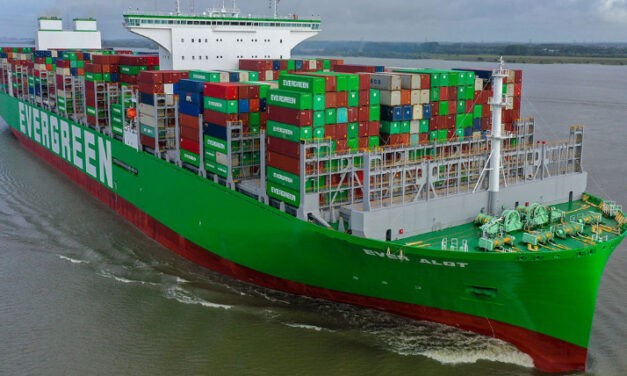
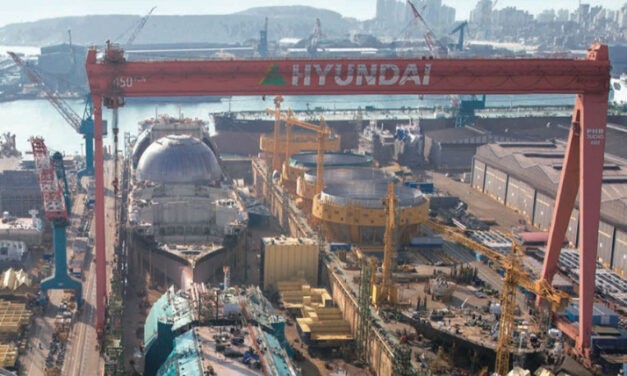
According to the Bremen Institute of Shipping Economics and Logistics (ISL), 99 per cent of global orders for new merchant ships, measured in CGT (compensated gross tonnes), went to shipyards in Asia in the first six months of the current year. At 47 per cent, the largest share of the approximately 600 newbuild orders with 21 million CGT went to South Korean shipbuilders, who were back in the lead for the first time since 2016, while 43 per cent went to the heavily expanded and highly subsidised shipyards in China. Despite a number of orders from domestic shipping companies, even Japan had to fight hard to secure at least a share, albeit a shrinking one...

Weiterlesen
China's specialised ship fleets are growing

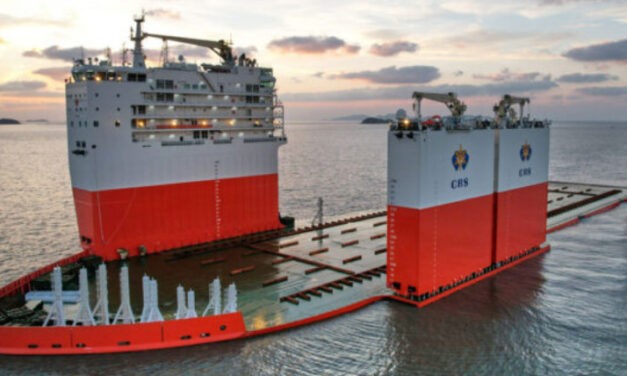
China's merchant fleet is not only growing with container ships, but also increasingly in specialised segments. For example, the Chinese company Guangzhou Salvage has strengthened its fleet with the semi-submersible newbuild "Hua Rui Long" built by the shipyard China Merchants Heavy Industry (CMHI) in Haimen. Equipped with DP2 technology for dynamic positioning, the 252 metre long and 60 metre wide special vessel has a tonnage of 74,226 GT and a carrying capacity of 82,000 tdw. The free deck area for transporting heavy and bulky goods, such as drilling rigs or dredgers, is specified at 151,000 square metres and can carry 90 tonnes per square metre.

Weiterlesen

No LNG imports via Hamburg

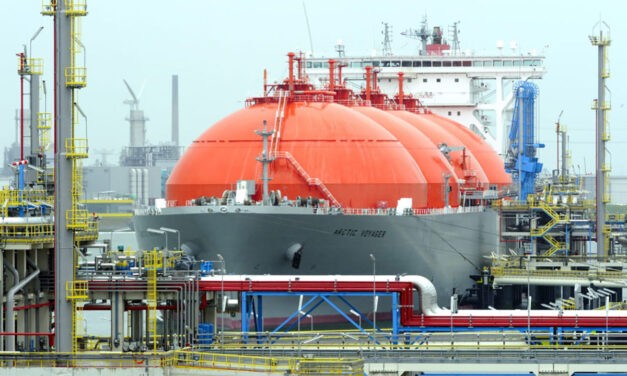
Following the federal government's refusal to financially support Hamburg's plans for a floating LNG terminal (FSRU), these appear to have been abandoned once and for all. The reasons given for the decision in the Hanseatic city are that, on the one hand, extensive dredging work would have been necessary at the planned berth in the Moorburg district and, on the other, that parts of the southern harbour area would have been cut off from traffic, as ships destined for there would not have been able to pass the FSRU and the LNG tanker moored next to it during unloading operations. In addition, time-consuming legal action could have been expected. As an alternative, liquefied natural gas (LNG) is now to be brought in from Brunsbüttel using feeder tankers, if the FSRU is to be used...

Weiterlesen

A first warning

In view of record order backlogs and the container ship deliveries expected between 2023 and 2025, the industry service Alphaliner has warned of possible overcapacity for the first time. For example, the usual peak season for container shipping in the third quarter of each year only had a much weaker impact in 2022, as was the case in the previous year. Alphaliner reports that many market observers consider these slumps to be less seasonal and more structural. They fear a global recession. War risks, exploding energy costs, political instability and general inflation would have an impact on general consumer spending and thus on global trade volumes, especially for industrial goods. According to forecasts by the...

Weiterlesen

Back to national and alliance defence

After 124 comes 127: In defence against threats from the air, the next generation of frigates is slowly taking shape. After the planned end of service life of the Class 124 frigate in the years 2034 to 2036, the Next Generation Frigate - Air Defence (NGFrig-AD) project, hereinafter referred to as Class 127 frigate (F 127), will ensure that air defence capabilities are maintained in a timely and threat-appropriate manner, that sea-based ballistic missile defence (BMD) capabilities are added and that hypersonic threats are countered. The platform is also intended to fulfil the Naval Maritime Precision Strike - Long Range (NATO Capability Code NMS-LR) capability described in the NATO Capability Targets 2021...

Weiterlesen
en_GBEnglish