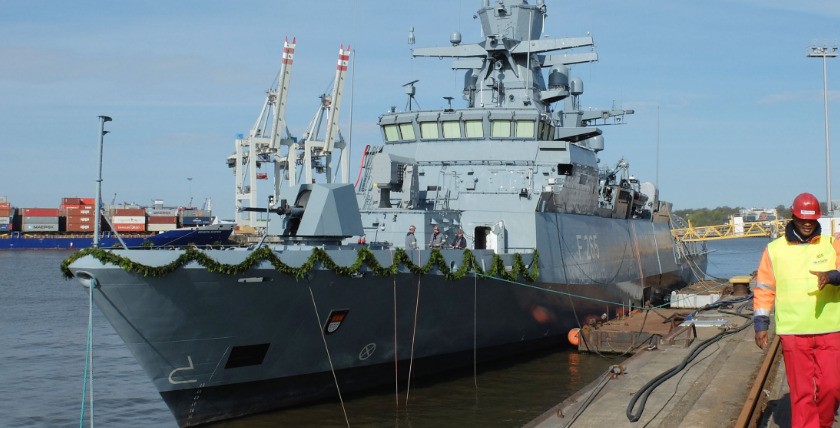



The sixth Köln: A special day that the naval enthusiasts of the cathedral city and the "Freundeskreis Marineschiffe Köln" had been longing for: on 21 April, the sixth Köln officially received her name. However, the corvette is even more eagerly awaited by the navy, as the orders and missions are extensive and increasing.
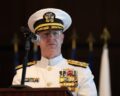
The welcoming speeches by the guests of honour followed at 10.30 am. Speaking on behalf of ARGE 130 was Tim Wagner, CEO of NVL B.V. & Co. KG, the company managing the project together with thyssenkrupp Marine Systems GmbH and GERMAN NAVAL YARDS KIEL GmbH, the Parliamentary State Secretary Siemtje Möller spoke on behalf of the Federal Ministry of Defence and Andy Grote, Senator of the Interior for the City of Hamburg. The Inspector of the Navy, Vice Admiral Jan Christian Kaack, emphasised how urgently this "warfighter" is needed for the Navy, how high the demand is and that combat power is "sexy". From his own experience, he also emphasised the importance of the sponsorships of naval units with cities and countries, especially inland. The godmother Henriette Reker, Lord Mayor of Cologne, emphasised the pride of her city that a ship with the name Cologne will once again set sail.
The traditional christening ceremony began with the cutting of the champagne bottle's tether and the traditional wish for good sailing at all times and a hand's breadth of water under the keel. It was supposedly planned to christen the ship with a bottle of Kölsch, but this break with a centuries-old tradition was unthinkable. Nevertheless, the special Rhenish flair was not neglected thanks to the musical support of the Kiel Naval Music Corps, which concluded the ceremony with the national anthem.
Following the naming ceremony, the guests were invited to lunch in the shipyard hall. Greetings were spoken, the certificate of sponsorship was signed and small gifts were distributed over Rhenish sauerbraten. The K 130 II is also available for assembly: with plastic building blocks.
The other corvettes 7 and 8 are being fitted out in Hamburg. Construction number 9, the corvette "Augsburg", is still in the production phase. The future "Lübeck" is to be the last unit of the second batch of Class 130 for the German Navy for the time being. Whether this is the final decision or not is something we will be following closely over the next few months.
Deployment and procurement of the class 130 corvettes
[ds_preview]
Die Korvetten Klasse 130 (K130), auch als Braunschweig-Klasse kategorisiert, stellen eine Schlüsselkomponente für Krisenreaktionseinsätze der Marine dar. Hauptaufgaben sind die Aufklärung der Überwasserlage und die Seezielbekämpfung. Der Inspekteur der Marine, Vizeadmiral Jan C. Kaack, unterstrich in seiner Ansprache die Bedeutung der Korvette als Spezialisten der Randmeerkriegführung. Das Einsatzspektrum reicht von der Friedenspräsenz über militärische Aufgaben der Krisenbewältigung bis zum Kampf in Randmeeren und der Waffenwirkung an Land. Die ersten fünf Einheiten der Braunschweig-Klasse befinden sich seit 2008 im Dienst und werden bei internationalen Bündniseinsätzen, etwa im Rahmen der UN-Mission im Libanon (UNIFIL), eingesetzt. Zurzeit verstärkt die Korvette "Erfurt" die Standing Naval Maritime Group 1 der NATO in ihren Aufgaben im Nordflankenraum. Sie wurde infolge der aktuellen Entwicklungen vom ursprünglich vorgesehen Einsatz vor der Küste der Levante am 26. Februar 2022 in Richtung Norwegensee umgeroutet.
Die Beschaffung der K130 geht auf die zweite Hälfte der 1990er Jahre zurück. Eine Bedarfsforderung von 1997 sah vor, die 40 Schnellboote der Deutschen Marine durch 15 Korvetten zu ersetzen. Aus Haushaltsgründen und wegen der damaligen sicherheitspolitischen Lagebeurteilung wurde die Anzahl der Korvetten reduziert. Fünf weitere Korvetten sollten dazu beitragen, die individuellen Einsatzbelastungen aller Korvetten und folglich der Marine insgesamt zu reduzieren. Möglichst große Baugleichheit sollte die Aufwände für Ausbildung sowie Infrastruktur an Land wie auch in technischer, personeller und organisatorischer Hinsicht herabsetzen. Der Plan zur Beschaffung fünf weiterer Einheiten wurde im Herbst 2016 bekanntgegeben und der Bauvertrag am 12. September 2017 unterzeichnet.



 English
  German
0 Kommentare