

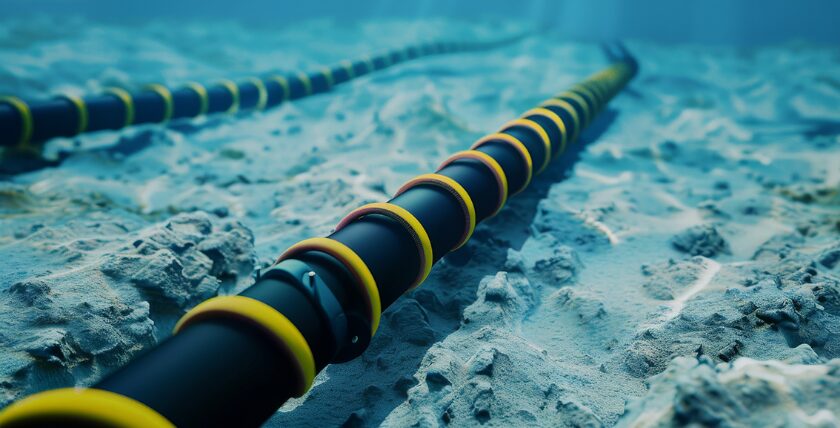




Mehr als ein Dutzend Unterwasserkabel sind durch das Rote Meer verlegt. Mindestens drei von ihnen wurden wohl durch den Anker eines durch die Houthi-Milizen angegriffenen Frachtschiffs durchtrennt. Am 18. Februar 2024 wurden zwei Anti-Schiffs-Raketen auf den Massengutfrachter „Rubymar“ (171 Meter, 19.000 Tonnen) abgefeuert, von denen eine das Schiff traf und schwere Schäden verursachte. Das Schiff sank am 2. März.[ds_preview]
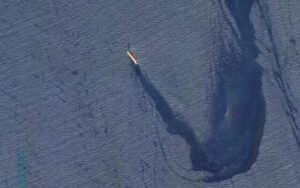
Aerial view of the "Rubymar" with leaking oil after the missile attack. Image: USCENTCOM
Now a first 25,000-kilometre-long important data line between Asia and Europe has been repaired by a ship belonging to E-Marine, a subsidiary of the Abu Dhabi-based Emirates Telecommunications Group. The fibre optic cable, whose repair required access to Yemeni waters, was put back into operation in July, according to a Yemeni government representative. The repair ship "Niwa" will remain in Yemeni waters to repair the other damaged cables.
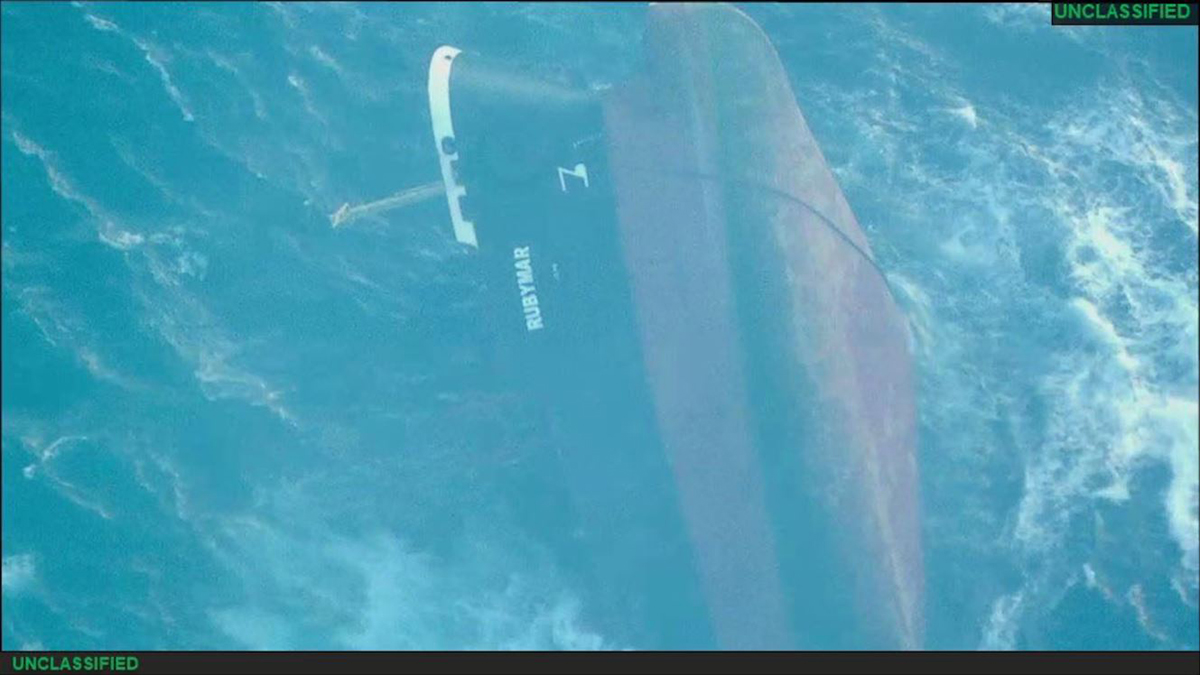
MV "Rubymar" sinks in the Red Sea. Picture: USCENTCOM
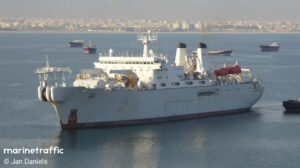
Cable repair ship NIWA. Source: Marinetraffic/J.Daniels
Months of negotiations were necessary for the cable operators to commission the repair work. Agreements had to be reached not only with the internationally recognised government in the south, but also with the Houthi-backed government in the north.
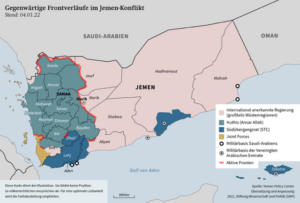
Political situation in Yemen (as of 2022). Source: Yemen Policy Centre and SWP
Unprotected underwater installations (seabed infrastructure) and the particular challenges of carrying out repairs, as is now the case in the Red Sea, once again highlight the vulnerability of free global trade and its data connections.
It would therefore be good if the concerns regarding the security and protection of critical infrastructure were taken into account with an objective and comprehensive political discussion and the necessary measures were also implemented with rigour in Germany. The inspector of the navy has already warned against hesitation in the modernisation of the German naval forces and emphasised their importance for the protection of critical infrastructure.
kdk
Source: gCaptain




 English
  German
Repeating the current (inadequate and ineffective!) legal regulations over and over again does not help at all. The BP See is incapable of handling this task (then it could do nothing else, and it would also need more units and personnel - realisation can be forgotten). Unless, of course, the maritime services of all ministries were combined to form a truly powerful coastguard worthy of the name (like the US Coast Guard). A camel would sooner go through the eye of a needle than the relevant ministry leaders in Germany would agree to such a proposal.
It is high time to legally define the protection of critical infrastructure in peacetime as part of the mission of the armed forces (especially, but not only) the navy. If this is not done, we will be repeatedly surprised by sabotage attempts such as the recent one at the Cologne-Wahn airbase. And NO, the protection of critical infrastructure by the army would NOT be a return to the Third Reich or any other threat to the democratic constitutional state!
Matthias Roesner, Büttelborn
In Germany, the protection of critical infrastructure on the seabed is primarily the responsibility of the federal and state police forces - at least in peacetime. The Bundeswehr can provide administrative assistance upon request if free capacities are available. Among other things, this was the subject of a public hearing of the Bundestag's Committee on Internal Affairs on 1 July 2024 on the powers of the federal police. The massive deficits in the security structure in the relationship between the federal and state armed forces were addressed, as was the demand for an efficient German Coast Guard. The experts' statements are available at
https://www.bundestag.de/ausschuesse/a04_inneres/anhoerungen/1009796-1009796
The verbatim record of the hearing will be available soon.
Uwe Jenisch, Kiel